
Kategori: Target Classes

Ion Channels as Drug Targets

Ion Channels as Drug Targets: Modern Strategies for Ligand Discovery, Screening, and Early Hit Identification

Inquiry

Ion channels sit at the center of electrical and chemical signaling in biology. They control excitability in neurons and muscles, shape synaptic transmission, regulate secretion, and tune countless homeostatic processes. Unsurprisingly, ion channel dysfunction is linked to neurological disease, pain, cardiovascular disorders, respiratory disease, and more. Hereby, ion channels remain a proven class of drug targets. Recent advances in cryo-electron microscopy (cryo-EM) have also made it increasingly clear that channels are not static pores: they adopt multiple conformations (resting, activated, inactivated, desensitized) that can present distinct ligand-binding pockets and “druggable” opportunities. [1] 

Yet despite the opportunity, ion channel drug discovery is still widely viewed as challenging. The reason is not a lack of biology, it’s the practical reality of discovering small molecule ion channel binders that are selective, cell-penetrant, and functionally meaningful, while navigating state-dependent binding and assay constraints. Patch clamp electrophysiology remains the gold-standard functional readout [3], but it is time-intensive, and even modern automated patch clamp is more resource-demanding than many early-stage teams can afford to run at true “chemical-space exploration” scale. [4] 

For that reason, today’s best programs use a toolbox approach to ion channel ligand discovery: pairing functional assays (patch clamp or fluorescence flux) with ion channel binding assays, structural biology, and screening strategies that accelerate early hit identification for ion channels. [5] One of those strategies is DNA encoded library (DEL) ion channel screening, which enables pooled, binding-based enrichment of ligands from extremely large libraries. DEL screening is not a replacement for electrophysiology, but it can be a powerful way to generate high-quality chemical starting points that are then validated and optimized using functional assays. [15] 

This article takes a broader view of ion channels as drug targets covering the therapeutic landscape, key scientific constraints, and the main ion channel screening technologies used in discovery while also explaining where DEL screening for ion channel targets can fit (including nonfunctional ion channel ligand discovery approaches) as a complementary engine for ion channel ligand discovery and small molecule ion channel binders.

Why ion channels are high-value drug targets

Ion channels are integral membrane proteins that regulate the movement of ions (Na, K, Ca², Cl) across membranes. That movement translates into electrical signals, intracellular second-messenger dynamics (especially Ca²), and changes in membrane potential that control downstream physiology. From a translational perspective, channels are “high leverage” targets: modest shifts in gating, conductance, or channel availability can produce meaningful clinical effects – analgesia, antiarrhythmic activity, bronchodilation, anxiolysis, seizure control, and more.

A recent perspective emphasizes that ion channels are a validated but historically underexploited target class, in part because discovery is constrained by selectivity, safety, and assay complexity. [2] Structural biology has strengthened the case for ion channels by revealing conserved and family-specific pockets, lipid interactions, auxiliary subunits, and state-dependent binding sites that can be targeted by diverse chemotypes. [1]

“Channel state” is the core concept

Unlike many soluble enzymes, ion channels cycle between multiple functional states. This is not a nuance, it often is the mechanism. Two practical consequences follow:

  1. The same compound can look different in different assays (depending on voltage protocol, agonist conditions, desensitization, or state occupancy).
  2. The most relevant ligand-binding pocket may only exist or be most accessible in a particular state.

Modern cryo-EM reviews of voltage-gated channels highlight how drugs and toxins can stabilize different conformations and bind at multiple sites, which helps explain why electrophysiology protocols and assay context matter so much. [1]

Ion channel families commonly pursued in drug discovery

There are many ion channel genes and channel-like complexes, but most small-molecule discovery programs cluster around a few major groups.

Voltage-gated ion channels (Nav, Cav, Kv)

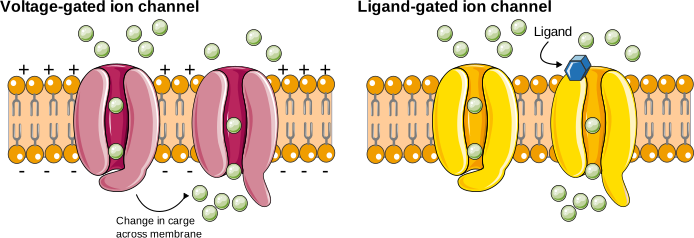
Voltage-gated channels open and close in response to membrane potential. They are central to excitability in neurons, heart, and muscle. Cryo-EM has enabled direct mapping of drug binding sites in human sodium channels, illustrating how chemically different scaffolds can engage distinct pockets and sometimes distinct numbers of sites on a single channel. [11]

Figure 1: Mechanistic overview of Voltage-gated ion channels (Left) and Ligand-gated ion channels (right).

Drug discovery implications: state dependence, kinetics (on/off rates), subtype selectivity, and tissue distribution often dominate feasibility. For example, sodium channel drug discovery programs frequently aim for use-dependent inhibition in hyperexcitable tissue while minimizing effects in normal physiology.

Ligand-gated ion channels (GABAA, nAChR, glutamate receptors, P2X)

Ligand-gated channels convert chemical neurotransmitters into fast electrical signals. A major practical challenge is that subunit composition can change pharmacology: the “same” receptor family can exist in many assemblies with distinct binding pockets and functional outcomes.

Recent work isolating native GABAA receptor assemblies and solving structures bound to clinically relevant drugs provides a vivid example of how real-world pharmacology depends on receptor composition and state. [9] 

TRP channels (TRPV1, TRPA1, TRPM8, etc.)

Transient Receptor Potential (TRP) channels integrate temperature, inflammation, and chemical signals. A recent review describes how TRP channel drug discovery has expanded beyond pain into respiratory, metabolic, and neuropsychiatric diseases as well as oncology-relevant biology, while also underscoring translational pitfalls (e.g., on-target thermoregulation issues in some TRPV1 programs). [8] 

CFTR and the power of “channel modulators”

Cystic Fibrosis Transmembrane Conductance Regulator (CFTR) is a clinically transformative case story for ion channel modulation. A study showing high-resolution structural work showed how components of triple-combination therapy bind CFTR and synergistically rescue folding and/or function in the ΔF508 context. [10] 

Takeaway: channels often require mechanism-specific and sometimes multi-ligand strategies. That reality should influence how you design screening cascades and hit-to-lead plans.

What makes ion channel drug discovery particularly challenging?

Ion channel programs rarely fail because the target is “not relevant.” More often, they fail because connecting binding → functional effect → therapeutic window is harder than expected.

1) State-dependent binding and the “moving target” problem

Channels change conformation during gating. A compound can bind preferentially to one state, leading to strong effects under some protocols and weak effects under others. Structural mapping of Nav1.7 antagonists provides concrete evidence: multiple chemotypes bind different sites and stabilize different states meaning your assay protocol can determine what you see. [11] 

Practical takeaway: define the desired state dependence early (e.g., tonic vs use-dependent inhibition) and ensure the screening cascade measures that property (not just “any inhibition”).

2) Translating binding into functional modulation

A binder is not automatically a blocker or opener. Functional consequence depends on:

  • binding site (pore vs allosteric pocket),
  • kinetics and residence time,
  • state preference,
  • membrane access / partitioning,
  • and biological system (cell type, auxiliary subunits, lipid composition).

This is why mature discovery programs treat ion channel binding assays and functional assays as complementary rather than competing.

3) Selectivity and safety are inseparable

Channel families can be conserved, and off-target channel activity can create safety concerns. This is one reason automated electrophysiology platforms became prominent in cardiac safety assessment and late-stage profiling. [6] 

4) Assay constraints and throughput limitations

The classic patch clamp paper (Hamill et al.) captures why electrophysiology is so powerful – and implicitly why it has historically limited throughput. [3] Automated patch clamp has improved scale and standardization but remains a more intensive modality than most plate-based assays or pooled binding selections. [4]

Ion channel screening technologies: what each approach is good for

The fastest way to build a productive ion channel drug discovery engine is to be explicit about what each assay answers and what it doesn’t.

Manual patch clamp: maximal information, minimal throughput

Manual patch clamp provides:

  • precise voltage protocols,
  • detailed kinetics,
  • mechanistic interpretation (block vs gating shifts),
  • and high-confidence data.

It is still the benchmark for many channel decisions. [3] 

Automated patch clamp: scalable electrophysiology (with practical constraints)

Automated patch clamp (APC) boosts throughput and reduces operator variability. Reviews of APC innovation describe how it has become standard in many organizations for lead optimization and safety profiling. [4,6] 

Where APC is strongest:

  • confirming functional activity of prioritized hits,
  • running SAR efficiently once you have a tractable series,
  • safety panels (depending on program needs).

Fluorescence/flux and membrane potential assays: fast functional proxies

Plate-based assays can screen larger compound sets quickly. A review of high-throughput ion channel screening technologies summarizes the major categories: Binding assays, flux-based assays, fluorescence-based assays, and automated electrophysiology flowed by how they map to different channel classes. [5] 

Common pitfalls: indirect readouts, coupling artifacts, and off-target effects. These assays are extremely useful, but they demand careful controls and orthogonal validation.

Ion channel binding assays: “does it bind?” still matters

Binding assays can feel less fashionable than functional assays, but for channels they remain strategically useful, especially in early phases of drug discovery.

Why binding assays matter in practice:

  • triaging functional assay artifacts (is it direct channel binding or pathway interference?)
  • mapping competition vs known ligands (where tracers exist)
  • supporting selectivity strategies
  • and enabling nonfunctional ion channel ligand discovery (binder-first programs)

Importantly, binding assays can be deployed in multiple formats (radioligand displacement, SPA, filtration, and in some cases biophysical approaches when target presentation allows). The best format depends on channel class, available ligands, and how the target is prepared.

Modern hit-finding strategies for ion channel ligand discovery

There isn’t a single “best” approach to ion channel ligand discovery. Most successful programs mix methods across stages.

1) Classic small-molecule HTS (functional or binding-based)

If you have a robust plate assay or scalable APC, HTS can deliver hits quickly. The challenge is often what happens next: HTS hits can cluster into liabilities (promiscuity, low solubility, poor permeability) and may require significant triage before electrophysiology.

2) Fragment-based discovery (FBDD)

Fragments can be effective if you measure binding reliably and/or have strong structural biology. For channels, feasibility often hinges on target presentation and assay sensitivity.

3) Structure-enabled design (cryo-EM-guided)

Cryo-EM has changed ion channel medicinal chemistry by making binding pockets visible and enabling rational analog selection. Reviews of voltage-gated channels highlight this shift, emphasizing how structures can explain pharmacology and guide optimization. [1] 

Concrete examples include:

  • Nav1.7 structures with diverse antagonists and lead compounds [11] 
  • Native GABAA receptor assemblies bound to clinically used drugs [9] 
  • CFTR modulator binding that clarifies synergy in triple therapy [10] 

4) In silico screening and AI-assisted prioritization

Virtual screening can reduce experimental burden, but outcomes depend on the accuracy of the target model and whether you’re docking into the relevant state. For channels where state dependence dominates, computational work often performs best as a prioritization layer rather than the sole discovery engine.

5) Biologics and alternative modalities (beyond small molecules)

Small molecules dominate ion channel pharmacology because many clinically relevant pockets are in the pore domain or allosteric sites not easily accessed by large biologics. Still, there is an emerging landscape of antibodies targeting ion channels, largely aimed at extracellular epitopes for specific mechanisms. A detailed review discusses the opportunities and technical challenges of ion-channel-targeting antibodies. [12] 

Why mention this on a small-molecule page?

Because it reflects a broader industry trend: teams increasingly pursue multiple modalities in parallel when classic small molecules struggle. Even if your program is small-molecule-led, understanding the modality landscape helps sharpen differentiation and risk planning.

Target presentation: the make-or-break detail for ion channel screening

No matter which discovery route you use (HTS, fragments, structure-based, DEL), ion channels bring a practical question to the surface:

How do you present the channel in a way that preserves relevant structure and pharmacology?

Cell-based presentation (native or engineered)

Cell-based systems preserve membrane environment and (often) native assembly. They enable direct functional assays and can support certain target-engagement approaches. The trade-off is complexity: background binding, expression variability, and cell-specific effects can complicate interpretation.

Purified protein in detergent or nanodiscs

Purified channels can enable cleaner biochemical and biophysical work, but detergents may destabilize or bias conformations. Nanodiscs and related membrane mimetics aim to preserve a more native-like lipid environment.

Two recent reviews provide accessible entry points:

  • Nanodiscs for the study of membrane proteins (overview of nanodisc platforms and applications) [13] 
  • Nanodiscs in membrane protein drug discovery and development (focus on drug discovery applications and workflows) [14] 

Practical point: Most ion channel programs use multiple formats over time: Cell-based for physiological relevance and purified/nanodisc formats for mechanistic binding or structure efforts when feasible.

DNA-Encoded Library (DEL) screening as one route to ion channel ligand discovery

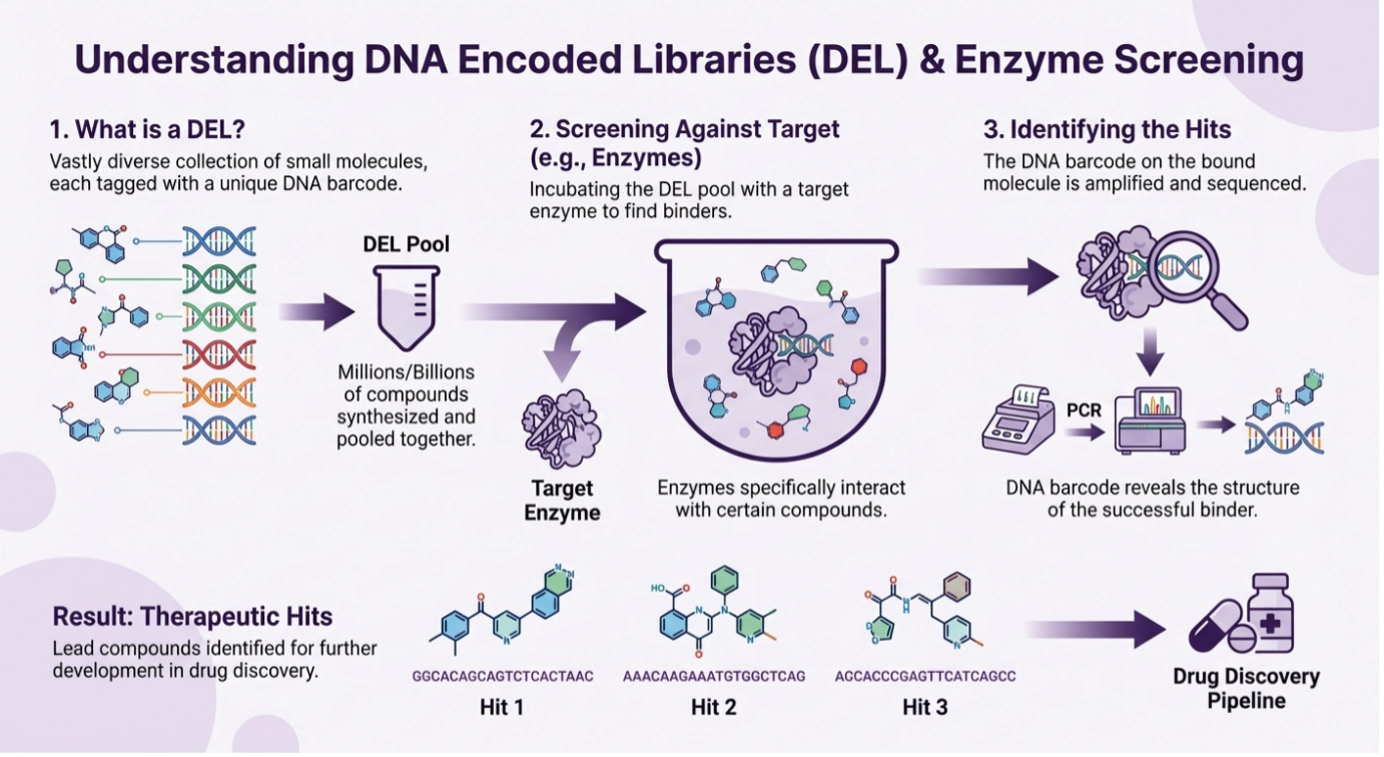
DEL is best understood as a binder discovery engine: a way to identify ligands by affinity selection from exceptionally large chemical libraries, followed by off-DNA resynthesis and validation. A comprehensive review describes how DEL libraries are built, screened, and analyzed, and why they can deliver rapid access to “early chemical matter.” [15] 

Why DEL can be useful for ion channels

Ion channels can be bottlenecked by functional assay throughput. DEL can help by shifting the earliest step “find starting matter” toward a pooled, binding-based workflow. That enables:

  • rapid early hit identification for ion channels across diverse chemotypes,
  • efficient exploration of chemical space with low target consumption,
  • and nonfunctional ion channel ligand discovery when you need binders first and mechanism later.

This is especially attractive when you have strong genetic/biological rationale but limited chemical starting points.

Live-cell and in-cell selection methods: why they matter for membrane proteins

Historically, DEL selections were most common on purified proteins. However, the field has advanced to include selections in a cellular context:

  • A Nature Chemistry paper reported a method enabling DEL selections against endogenous membrane proteins on live cells without overexpression by DNA-tag labeling of the membrane protein. [16] 
  • A JACS study reported screening a multimillion-member DEL inside a living cell (Xenopus oocyte-based), demonstrating feasibility of in-cell selections which could potentially lead to the discovery of intracellular ion channel modulators. [17] 

These developments are relevant to ion channels because native membrane context and assembly can strongly influence which ligands bind productively.

“Binding-first” doesn’t mean “function-last”

A healthy ion channel discovery cascade treats DEL as a front end:

  1. DEL selection →
  2. off-DNA resynthesis →
  3. orthogonal confirmation (binding and/or cellular engagement) →
  4. functional follow-up (patch clamp/APC and/or plate assays) →
  5. iterative SAR.

That flow is consistent with how many organizations allocate resources: run expensive electrophysiology on chemistry that has already “earned” deeper investment.

A practical workflow for ion channel programs (broad, realistic, and scalable)

Below is a pragmatic discovery flow that works whether your entry point is HTS, structure-based design, fragments, or DEL.

Step 1: Define the therapeutic hypothesis and desired mechanism

Be explicit about:

  • blocker vs modulator vs opener,
  • tonic vs use-dependent behavior,
  • desired kinetics (fast/slow onset, long/short residence),
  • key safety concerns and counterscreens.

This prevents the common failure mode of optimizing potency in an assay that does not reflect the desired mechanism.

Step 2: Choose an entry strategy based on constraints

  • Robust plate assay available? HTS can be efficient for initial hit-finding.
  • Structural data strong? Structure-guided libraries and rational analog selection may be faster than brute-force screening.
  • Electrophysiology bandwidth limited? Consider binder-first strategies (including DEL screening) to generate chemical matter before deep functional investment.

The “right” answer often changes over time as you learn more about the target and the assay landscape.

Step 3: Confirm hits with orthogonal assays

For ion channels, orthogonal confirmation is not bureaucracy its survival:

  • confirm direct target engagement, if possible,
  • use at least one independent functional format when feasible (e.g., flux assay + patch clamp),
  • counter-screen early against close homologs or liabilities relevant to the indication.

Step 4: Deploy electrophysiology strategically

Use patch clamp and APC to answer questions that other assays can’t:

  • state dependence,
  • gating shifts,
  • kinetics/residence,
  • protocol-relevant behavior that triggers physiological patterns.

APC reviews emphasize how electrophysiology scale has improved – but also why it still benefits from strong upstream triage. [4,6] 

Where Vipergen fits (in a broader ion channel discovery story)

Vipergen focuses on DNA-encoded library technology, including workflows designed for challenging targets such as membrane proteins and receptors. Vipergen’s technology overview describes three components: YoctoReactor® (DEL creation), Binder Trap Enrichment® (BTE; homogeneous DEL screening), and Cellular Binder Trap Enrichment® (cBTE) for screening DELs inside living cells. [19,20] 

For ion channel programs, that can be most relevant when:

  • You want ion channel ligand discovery and small molecule ion channel binders early, before committing heavy electrophysiology resources.
  • Your channel is difficult to purify or loses native pharmacology outside the membrane,
  • You want a binder-first route to early hit identification for ion channels, feeding your functional cascade.

Vipergen also describes DEL screening services for purified biotinylated integral membrane proteins formulated in nanodiscs or detergent, which can be useful when you have a stable purified channel construct and want controlled binding selections. [21]

Conclusion: ion channel success comes from integration – not a single “best” technology

Ion channels remain among the most clinically impactful and scientifically demanding drug targets. The combination of state-dependent conformations, membrane biology, and assay constraints means that success usually comes from an integrated strategy:

  • Use the right ion channel screening technologies for the question at hand (functional vs binding vs structure).
  • Treat ion channel binding assays as a practical way to reduce artifacts and anchor mechanism.
  • Deploy electrophysiology (manual or automated) where it delivers decisive information.
  • Use pooled binder discovery methods (including DNA encoded library ion channel screening) when early chemical matter is the limiting factorespecially for nonfunctional ion channel ligand discovery and rapid early hit identification for ion channels.

In practice, this integrated mindset is what turns ion channels from a challenge into a manageable, repeatable discovery workflow. 

References

[1] Huang J, Pan X, Yan N. Structural biology and molecular pharmacology of voltage-gated ion channels. Nat Rev Mol Cell Biol (2024), 25 (11), 904-925. https://doi.org/10.1038/s41580-024-00763-7 

[2] Bagal SK et al. Ion Channels as Therapeutic Targets: A Drug Discovery Perspective. J Med Chem (2013), 56, 3, 593-624. https://pubs.acs.org/doi/10.1021/jm3011433 

[3] Hamill OP et al. Improved patch-clamp techniques for high-resolution current recording from cells and cell-free membrane patches. Pflügers Arch (1981), 391 (2), 85-100. https://link.springer.com/article/10.1007/BF00656997 

[4] Obergrussberger A et al. Automated patch clamp in drug discovery: major breakthroughs and innovation in the last decade. Expert Opin Drug Discov (2021), 16 (1), 1-5. https://doi.org/10.1080/17460441.2020.1791079 

[5] Yu H et al. High throughput screening technologies for ion channels. Acta Pharmacol Sin (2015), 37 (1), 34-43. https://doi.org/10.1038/aps.2015.108 

[6] Bell DC, Fermini B. Use of automated patch clamp in cardiac safety assessment: past, present and future perspectives. J Pharmacol Toxicol Methods (2021), 110, 107072. https://doi.org/10.1016/j.vascn.2021.107072 

[7] Santos R et al. A comprehensive map of molecular drug targets. Nat Rev Drug Discov (2017), 16 (1), 19-34. https://doi.org/10.1038/nrd.2016.230 

[8] Koivisto A-P et al. Advances in TRP channel drug discovery: from target validation to clinical studies. Nat Rev Drug Discov (2022), 21 (1), 41-59. https://doi.org/10.1038/s41573-021-00268-4 

[9] Sun C et al. Cryo-EM structures reveal native GABAA receptor assemblies and pharmacology. Nature (2023), 622, 195-201. https://doi.org/10.1038/s41586-023-06556-w 

[10] Fiedorczuk K, Chen J. Molecular structures reveal synergistic rescue of Δ508 CFTR by Trikafta modulators. Science (2022), 378 (6617), 284-290. https://doi.org/10.1126/science.ade2216 

[11] Wu Q et al. Structural mapping of Nav1.7 antagonists. Nat Commun (2023), 14 (1), 3224. https://doi.org/10.1038/s41467-023-38942-3 

[12] Hutchings CJ et al. Ion channels as therapeutic antibody targets. MAbs (2019), 11 (2), 265-296. https://doi.org/10.1080/19420862.2018.1548232 

[13] Denisov IG et al. Nanodiscs for the study of membrane proteins. Curr Opin Struct Biol (2024), 87, 102844. https://doi.org/10.1016/j.sbi.2024.102844 

[14] Dong Y et al. The application of nanodiscs in membrane protein drug discovery & development and drug delivery. Front Chem (2024), 12, 1444801. https://doi.org/10.3389/fchem.2024.1444801 

[15] Gironda-Martínez A et al. DNA-Encoded Chemical Libraries: A Comprehensive Review with Succesful Stories and Future Challenges. ACS Pharmacol Transl Sci (2021), 4 (4), 1265-1279. https://doi.org/10.1021/acsptsci.1c00118 

[16] Huang Y et al. Selection of DNA-encoded chemical libraries against endogenous membrane proteins on live cells. Nat Chem (2021), 13 (1), 77-88. https://doi.org/10.1038/s41557-020-00605-x 

[17] Petersen LK et al. Screening of DNA-Encoded Small Molecule Libraries inside a Living Cell. J Am Chem Soc (2021), 143, 7, 2751-2756. https://doi.org/10.1021/jacs.0c09213 

[18] Blakskjaer P et al. Fidelity by design: YoctoReactor and binder trap enrichment for small-molecule DNA-encoded libraries and drug discovery. Curr Opin Chem Biol (2015), 26, 62-71. https://doi.org/10.1016/j.cbpa.2015.02.003 

[19] Vipergen website: Technology overview (YoctoReactor®, BTE®, cBTE®). https://www.vipergen.com/technology/ 

[20] Vipergen website: Cellular Binder Trap Enrichment® (cBTE). https://www.vipergen.com/cellular-binder-trap-enrichment/ 

[21] Vipergen website: DEL – Integral Membrane Proteins (nanodiscs/detergent). https://www.vipergen.com/del-integral-membrane-proteins/ 

[22] Vipergen website: Understanding DEL Screening: From Target Binding to Hit Validation. https://www.vipergen.com/understanding-del-screening-from-target-binding-to-hit-validation/

Do you have an inquiry?

Contact us today and explore partnership opportunities.

Inquiry

Related Services

Service
Small molecule drug discovery for even hard-to-drug targets – identify inhibitors, binders and modulators
Molecular Glue Direct
PPI Inhibitor Direct
Integral membrane proteins
Specificity Direct – multiplexed screening of target and anti-targets
Express – optimized for fast turn – around-time
Snap – easy, fast, and affordable

Continue reading

Receptors as Drug Targets

Receptors as Drug Targets: Intracellular Ligand Discovery Using DNA-Encoded Libraries

Inquiry

Receptors sit at the heart of biology’s information flow. They detect extracellular cues (hormones, neurotransmitters, chemokines, growth factors), translate them into intracellular signals, and control everything from metabolism and immune responses to neural function and cell fate. Because receptor activity can be tuned, or redirected with the right ligand, receptors have become some of the most valuable and most intensively pursued drug targets.

Among receptor families, G protein-coupled receptors (GPCRs) are especially prominent: a recent review analyzing the “drugged GPCRome” reports 516 approved drugs targeting GPCRs (~36% of all approved drugs). [17] That scale is exactly why receptor programs are so competitive and why teams increasingly seek technologies that can uncover new chemotypes, new binding sites (including allosteric pockets), and better starting points for medicinal chemistry.

One of the most effective modern approaches for doing this is DNA-encoded library (DEL) screening. DELs link each small molecule to a DNA barcode, enabling massively parallel affinity-driven selections and rapid identification of binders by sequencing. The core concept traces back to early “encoded combinatorial chemistry” work, which since 1990 has matured into an industry workhorse for hit discovery. [1][2]

For receptor programs, DEL screening offers something particularly attractive:

  • Receptors are ligand-driven targets, often with multiple conformations and multiple druggable pockets.
  • DEL screening can sample very large chemical space efficiently compared with classical plate-based high-throughput screening (HTS). [2]
  • DELs can be adapted to challenging receptor formats, including purified membrane receptors in detergent or nanodiscs, and increasingly to live-cell or in-cell selection strategies. [6][7][8][22]

That said, a successful receptor program is rarely “one-tech-only.” Receptor discovery is a pipeline problem: you want the right starting points and the right evidence early – binding, target engagement, selectivity, and functional impact. So, in this article, we’ll take a broader view: how receptors behave as drug targets, how ligands are discovered across multiple discovery paradigms, and where DEL fits best; especially for organizations seeking receptor ligand discovery services, small molecule receptor binders, and a practical receptor drug discovery platform that can handle hard receptor formats.

Receptors as ligand-driven drug targets

Receptors in cellular signaling

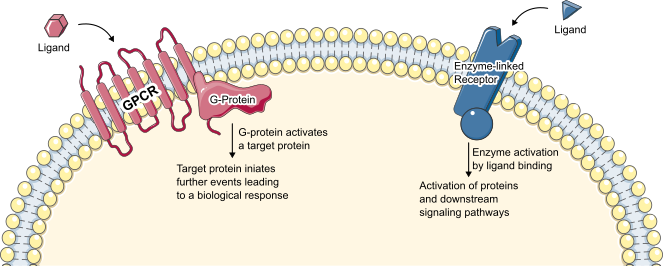
Receptors can be viewed as “signal processors.” Ligands don’t just turn receptors on or off; they can stabilize specific receptor states, bias signaling toward particular pathways, and change receptor localization or trafficking. This is particularly visible in GPCR pharmacology, where allosteric modulation and state-dependent signaling have become central to modern drug discovery thinking. [9][10]

A helpful way to frame receptor pharmacology (especially for GPCRs) is that ligands can act as:

  • Orthosteric ligands that compete with endogenous agonists at the primary binding site.
  • Allosteric modulators that bind elsewhere to tune potency/efficacy, improve selectivity, or alter signaling bias.
  • Bitopic ligands that engage both orthosteric and allosteric regions (in some receptor systems), often blending affinity with selectivity and unique pharmacology (conceptually aligned with allosteric principles discussed in GPCR allostery reviews). [9][10]

These concepts matter because they directly influence what you screen for and how you interpret hits. A selection or screen that only reports “binding” may miss functional nuance, while a functional assay may miss silent binders that become valuable after optimization or when paired with a second ligand (e.g., Positive Allosteric Modulator [PAM] discovery).

Therapeutic importance of receptor modulation

The medical reach of receptors is enormous:

  • GPCRs: CNS, cardiometabolic disease, inflammation, respiratory disease, pain relief, pain treatment, and more (with a very large fraction of approved medicines). [17]
  • Enzyme-linked receptors (e.g., receptor tyrosine kinases): oncology, immune disease, fibrosis – often targeted with biologics and small molecules.
  • Nuclear receptors: endocrine and metabolic disorders, inflammation, oncology; often with small molecules that tune transcriptional programs. [14][15][16]

In other words, receptors remain high-value targets and high-competition targets. That combination increases the premium on discovery strategies that can yield novel chemotypes, allosteric ligands, and selective binders that can be translated into function.

Figure 1: Overview of cell-membrane receptors G protein-coupled receptors (GPCRs) and Enzyme-linked receptors.

Why receptor ligand discovery is difficult (and why many “good hits” fail)

Receptor ligand discovery isn’t hard because receptors are “undruggable.” It’s hard because receptors are contextual – their ligandability and pharmacology can shift with receptor state, membrane environment, binding partners, and assay format.

Conformational ensembles, state dependence, and multiple pockets

Many receptors exist as ensembles of states whose populations depend on ligand, membrane composition, binding partners, and modifications. For GPCRs, this is the basis for concepts like partial agonism, biased agonism, and ligand-specific receptor conformations – phenomena that are deeply intertwined with allosteric modulation. [9][10]

In practice, this means:

  • An assay that traps one receptor state can enrich ligands for that state.
  • Ligands can be “real” binders but non-productive for the pathway you care about.
  • Allosteric sites can deliver selectivity advantages but hit rates can be low and effects can be subtle. [9][10]

Membrane proteins are format-sensitive

GPCRs and other integral membrane receptors often need stabilizing conditions (detergents, lipids, nanodiscs, stabilizing mutations, binding partners). These conditions can alter which sites are accessible and which conformations dominate. Nanodiscs, for example, are widely used to present membrane proteins in a controlled lipid environment and are broadly recognized as powerful tools in membrane protein biochemistry and biophysics. [8]

From a discovery standpoint, “format sensitivity” shows up as:

  • Variable protein stability (aggregation, denaturation, loss of native pharmacology).
  • Shifts in orthosteric/allosteric site accessibility.
  • Higher background binding from hydrophobic compounds in membrane-like environments.

Binding vs function is not the same gate

A binder can be:

  • a true receptor ligand with a useful functional profile,
  • a binder that fails to engage in cells,
  • a binder that hits a non-productive state,
  • or a binder that is “real” but not developable (solubility, permeability, off-targets).

A robust receptor strategy accepts this reality: you need both efficient hit-finding and efficient triage. That’s why modern receptor discovery programs increasingly combine hit-finding technologies (HTS, fragments, DEL, computational methods) with early orthogonal validation and functional profiling.

The receptor ligand discovery toolbox: beyond any single screening method

When teams search for receptor ligand discovery services or a receptor drug discovery platform, they’re usually weighing a portfolio of discovery routes, not just one. Different approaches shine at different points in the funnel: some are great at generating starting points, others excel at characterizing mechanisms or accelerating optimization.

1) Classical high-throughput screening (HTS)

HTS tests large numbers of compounds (often hundreds of thousands) using biochemical or cell-based assays. It remains a major pillar of drug discovery because it can be directly functional if the assay is designed that way. [13]

Where HTS excels

  • When you have a robust functional assay (e.g., GPCR signaling readout).
  • When you want early functional triage.
  • When the target behaves well in assay conditions.

Where HTS struggles for receptors

  • Assay development for receptors can be slow and artifact-prone (signal window, receptor expression variability, pathway coupling).
  • Membrane receptor formats can create background noise or stability issues.
  • Chemical space is limited by practical library size and cost compared with pooled approaches. [13]

HTS remains a strong option when the biology is well understood and the assay behaves, but for receptors that are unstable, require specific complexes, or signal in context-dependent ways, HTS can become resource-intensive early in a program.

2) Fragment-based drug discovery (FBDD) (H3)

Fragment screening uses small, low-complexity molecules (“fragments”) to efficiently sample chemical space and then grows or links them into potent ligands. FBDD is now mainstream, with a long pipeline of fragment-derived clinical candidates noted in an influential review. [11]

For GPCRs, fragment screening has historically been constrained by receptor stability in detergents and the sensitivity needed to detect weak fragment binding. Stabilized GPCR constructs (often referred to in the context of “StaR” GPCRs) and biophysical workflows have been used to enable fragment screening against GPCRs. [12]

Where FBDD excels

  • When you have strong structural biology and biophysics.
  • When you want highly ligand-efficient starting points.
  • When you can stabilize the receptor and obtain reliable binding measurements. [11][12]

Where FBDD struggles

  • Weak affinities demand sensitive, well-behaved receptor preparations.
  • Progress can bottleneck on structural cycles and chemistry.
  • Some receptor targets remain difficult to stabilize or measure with adequate throughput.

3) Structure-based and computational approaches

Structure-guided discovery is increasingly relevant for receptors, especially as structural coverage has expanded across GPCR families and nuclear receptors. In practice, structure-based tools are often most powerful after you have at least one validated chemotype – because they become tools for optimization, selectivity engineering, and hypothesis testing rather than purely for hit generation.

Even when computational approaches are used earlier (virtual screening, pharmacophore models), they typically benefit from experimental anchors, known ligands, binding-site constraints, or assay data that reduces the search space.

4) Biologics, peptides, and alternative modalities

Many receptors, especially extracellular or cell-surface receptors are effectively targeted by antibodies, peptides, or engineered proteins. Small molecules still matter profoundly (especially for intracellular receptor domains, GPCRs, and nuclear receptors), but a modern receptor portfolio often includes multiple modalities depending on mechanism, tissue access, and safety constraints. The practical takeaway is that “receptor targeting” is modality-agnostic; what changes is the discovery and validation toolkit.

5) DNA-encoded library (DEL / DECL) screening

DEL is a different engine: instead of testing compounds one-by-one, you screen pools of DNA-tagged compounds and identify enriched binders by sequencing. Modern DEL approaches and selection formats are covered in widely cited reviews. [2][3][4]

DEL screening is particularly relevant to receptor teams searching for:

  • DNA encoded library receptor screening
  • DNA encoded library screening for receptors
  • DEL screening for GPCR targets
  • small molecule receptor binders
  • hit identification for receptor targets
  • receptor ligand discovery outsourcing

But DEL screening should be understood in a broader workflow: DEL screening can be a powerful front-end binder discovery tool – especially when paired with strong validation and functional follow-up.

Receptor classes and target formats: what you can screen (and how)

A frequent misconception is that receptor programs can be categorized simply by receptor class (GPCR vs nuclear receptor vs RTK). The more predictive way to plan discovery is by format: purified domain vs full-length receptor, membrane mimetic vs cellular presentation, and the degree to which functional partners must be retained.

GPCR ligand screening

GPCR programs often seek orthosteric ligands, allosteric modulators (PAM/NAM), or ligands that bias pathway output. Reviews of GPCR allostery emphasize how allosteric ligands can fine-tune receptor function and often offer selectivity advantages compared with orthosteric ligands. [9][10]

DEL precedent for GPCRs

A notable peer-reviewed study demonstrated an allosteric “beta-blocker” for the β2-adrenergic receptor (β2AR) discovered via a DNA-encoded library selection against a purified GPCR. [5] This is a useful proof point: DEL can access GPCR allosteric chemistry when the receptor is presented in a workable format and selection conditions support that binding mode.

Why GPCR format choices matter

GPCRs are among the most format-sensitive targets in drug discovery. Depending on the receptor and hypothesis, teams may choose:

  • Purified receptor preparations (often stabilized, with defined partners)
  • Detergent-solubilized receptor
  • Receptor embedded in nanodiscs (a more native-like lipid environment) [8]
  • Live-cell or in-cell strategies when native context is essential for maintaining function or state distributions [6][7]

Even within a “GPCR ligand screening” project, multiple formats are often used sequentially: a binder discovery format (purified receptor or cell-based selection), followed by orthogonal binding assays and cellular function assays.

Nuclear receptor ligand identification

Nuclear receptors are intracellular transcription factors that regulate gene expression through ligand-dependent recruitment of coactivators and corepressors. Foundational and modern reviews describe the breadth of the nuclear receptor superfamily and the structural basis of ligand-driven receptor regulation. [14][15][16]

For nuclear receptor ligand identification, screening is often feasible with soluble ligand-binding domains or curated receptor complexes. The most common downstream validation steps include:

  • Orthogonal binding assays (biophysical or competition binding)
  • Coactivator recruitment assays (often energy transfer formats)
  • Transactivation reporter assays and gene expression studies

Because nuclear receptors are frequently “ligandable” but biologically nuanced (partial agonism, tissue-selective signaling), the ability to profile functional outcomes early can be as important as potency.

Enzyme-linked receptors and other receptor families

Receptor tyrosine kinases, cytokine receptors, and other signaling receptors may be addressed by small molecules (intracellular domains, allosteric sites, PPIs) or biologics. For small-molecule discovery, the same general principles apply; choose the right target format, use a discovery method compatible with that format, and validate with orthogonal evidence.

For example, even when the extracellular receptor is targeted by biologics, the intracellular kinase domain may be targeted by small molecules making “receptor drug discovery” a spectrum of projects rather than a single category.

Receptor binding assays and validation: the “truth stage” after screening

Regardless of how you find initial hits (HTS, fragments, DEL, or computational) you need to establish confidence. For receptors, that usually means orthogonal confirmation plus functional profiling. This is also where many programs gain speed: the better your validation plan, the faster you can discard false positives and focus chemistry on the most promising series.

Orthogonal binding confirmation (examples)

Common receptor binding assays include:

  • Biophysical binding (e.g., SPR/BLI) when receptor preparations are compatible and stable
  • Competition binding (radioligand or fluorescent ligand), frequently used for GPCR orthosteric sites
  • Proximity/energy transfer binding assays (e.g., TR-FRET/HTRF) when labeled reagents are available and the format is well behaved

For GPCRs and fragile membrane proteins, the choice of assay often hinges on receptor stability and presentation format; again highlighting why nanodiscs and stabilized receptors are important enabling technologies. [8][12]

Functional follow-up (examples)

Binding becomes therapeutically meaningful only once you understand functional outcomes. Typical functional assays include:

For GPCRs

  • Second messenger assays (cAMP, IP1)
  • Calcium flux
  • β-arrestin recruitment
  • Pathway panels to capture bias (when appropriate)

For nuclear receptors

  • Coactivator recruitment assays
  • Transactivation reporter assays
  • Transcriptomics or targeted gene expression panels

Key point: You can’t run a receptor program effectively unless your hit discovery approach is tightly coupled with a realistic validation plan. This is especially relevant for outsourcing: strong receptor ligand discovery services don’t stop at “hit lists” – they emphasize off-DNA synthesis (when relevant), orthogonal confirmation, and a credible path to functional understanding.

Target presentation: the practical decision that determines success

Receptors often fail at screening not because “the library” is wrong, but because the receptor wasn’t presented in a biologically and biophysically meaningful way.

Purified receptors: immobilization vs in-solution strategies

Purified receptors can be used in multiple assay architectures. For pooled selection technologies (including DEL), there are multiple ways to execute selection and capture, and the field has continued to innovate on selection formats and controls. [2][4]

In general:

  • Immobilization/capture can provide clean separation but risks perturbing conformation if the receptor is constrained or oriented poorly.
  • In-solution approaches can preserve native-like behavior but demand careful handling to control background binding and maintain receptor stability.

For receptors, the best approach is often the one that minimizes artifacts for that specific target while enabling robust counter-selection design.

Detergent vs nanodisc formats for membrane receptors

Nanodiscs are widely used membrane mimetics and are considered powerful for membrane protein studies because they provide control over lipid environment and size while preserving many aspects of native membrane protein behavior. [8]

For receptor ligand discovery, this matters because lipid context can influence:

  • pocket accessibility,
  • receptor stability,
  • active/inactive state distributions,
  • and background binding.

Some receptors behave acceptably in detergent, while others show better stability and pharmacology in nanodiscs. Even for the same receptor, different project goals (orthosteric competition vs allosteric site discovery vs state-selective ligand discovery) can shift the optimal format.

Live-cell and in-cell approaches (native context)

Two peer-reviewed examples illustrate how screening can move toward native receptor context:

  1. DEL selection against endogenous membrane proteins on live cells: a strategy enabling target-specific DEL selections on live cells for endogenous membrane targets. [6]
  2. DEL screening inside a living cell: a demonstration described as the first successful screening of a multimillion-member DEL inside a living cell. [7]

Not every receptor project needs live-cell or in-cell selection, but when target purification disrupts the biology or when native context is essential, these approaches can be strategically valuable. For example, projects involving native receptor complexes, fragile receptors, or receptors whose relevant conformations are stabilized by cellular components may benefit from formats closer to biology.

Where DEL fits in a broader receptor discovery strategy

DEL is best seen as one high-leverage engine in a receptor discovery toolbox – not a replacement for everything else.

What DEL is especially good at for receptors

  • Exploring huge chemical space efficiently relative to plate-based screening. [2]
  • Producing multiple series (clusters) that provide options for selectivity and developability.
  • Identifying small molecule receptor binders even when hit rates are low (common for allosteric sites).
  • Supporting difficult target formats when appropriate selection architectures exist, including advanced selection methodologies and cell-context approaches described in the literature. [3][4][6][7]

Where DEL should be paired with other approaches

  • If your key risk is functional mechanism, you may want early functional assays to triage binders quickly.
  • If your key advantage is structure-guided optimization, fragment screening or structure-driven workflows may complement DEL series finding. [11][12]
  • If your receptor is highly context-dependent, live-cell/in-cell selection or cell-based functional assays may be essential. [6][7]

This is exactly why “fragment vs DEL receptor screening” is often the wrong framing. The real question is: What is the fastest route to validated, optimizable chemotypes for your receptor, given your constraints? Many teams deliberately run two complementary engines in parallel, one that maximizes breadth (DEL or HTS), and one that maximizes interpretability (fragments/structure/biophysics), then converge on the strongest series.

DEL vs HTS vs fragment screening for receptors (a pragmatic comparison)

DEL vs HTS for GPCR targets

  • HTS: functional-first but can be limited by library size and assay complexity; still very powerful if you have a clean GPCR functional assay and robust automation. [13]
  • DEL: binding-first with enormous library scale; strong for finding novel binders (including allosteric) but requires deliberate validation and functional triage. [2][3][4]

A practical way to decide is to ask: Is my gating risk “finding any chemotype that binds” or “finding the right functional phenotype”? If binding discovery is the bottleneck (often true for selectivity-driven or allosteric programs), DEL can be a high-return front end. If functional phenotype is the bottleneck (e.g., bias, partial agonism, pathway selectivity), you may prioritize early functional screening or rapidly move DEL hits into functional assays.

Fragment vs DEL receptor screening

  • Fragments: superb ligand efficiency; excellent when you have stabilized receptors and a robust structural/biophysical engine; proven for GPCRs with stabilized constructs. [11][12]
  • DEL: scale-driven series discovery; can deliver multiple chemotypes fast; especially attractive for hard-to-hit pockets where you need breadth and novelty. [2][4]

Many receptor programs combine both: fragments provide high-quality anchors for rational optimization, while DEL provides breadth and alternative scaffolds that may solve selectivity, permeability, or IP landscape challenges.

A useful decision heuristic

  • Start with DEL when your main risk is “we need novel chemotypes and multiple starting points quickly,” especially for competitive receptor landscapes.
  • Start with FBDD when your main advantage is “we can stabilize the receptor and run structure-guided cycles efficiently.”
  • Use HTS when the assay is robust and your program requires functional triage at scale early. [13]

Case study: State-steered screening for allosteric receptor modulators

A 2024 Nature study illustrates how receptor conformational biology can be exploited to discover differentiated ligands: O’Brien and colleagues screened an ultra-large (~4.4 billion member) DNA-encoded chemical library against the inactive, naloxone-bound μ-opioid receptor (μOR) while counter-screening against the active, Gi/agonist-bound receptor to “steer” enrichment toward conformation-selective negative allosteric modulators (NAMs). This strategy yielded a single, strongly enriched NAM (compound 368) that enhanced naloxone binding affinity (reported EC50 ~133 nM in radioligand binding) and worked cooperatively with naloxone to potently suppress μOR signaling. Cryo-EM revealed that 368 binds the extracellular vestibule, directly contacting naloxone while stabilizing a distinct inactive extracellular conformation (notably involving TM2/TM7), reshaping orthosteric ligand kinetics in therapeutically favorable ways. In vivo, the NAM combined with low-dose naloxone more effectively reversed morphine- and fentanyl-driven behaviors while reducing withdrawal-like effects compared with conventional high-dose naloxone – highlighting how state-steered DEL screening can uncover receptor modulators with clinically relevant pharmacology. [22]

A practical workflow for receptor ligand discovery (service-ready view)

Whether you run this internally or via receptor ligand discovery outsourcing, the workflow below is a useful “minimum viable” path from receptor target to validated hits.

Step 1: Define the target hypothesis and desired ligand profile

Clarify:

  • Orthosteric vs allosteric intent
  • Desired mechanism (agonist, antagonist, inverse agonist, PAM/NAM)
  • Selectivity needs (subtype, off-target risk)
  • Biological context that must be preserved (membrane lipids, partners, modifications)

This step seems obvious, but it is the most common source of “screening mismatch.” If your therapeutic hypothesis requires an active-state binder or a pathway-biased ligand, you should reflect that early in assay design and target presentation choices (even if your first-stage method is “binding-first”). [9][10]

Step 2: Choose the screening route(s)

Options include:

  • Functional screening (HTS-like)
  • Binding-first approaches (DEL, fragments)
  • Combined strategies (e.g., DEL for breadth + functional assays for triage)

DEL and fragment methods have strong review coverage; selection format choice often matters as much as the underlying library. [2][3][4][11]

Step 3: Choose target presentation

For membrane receptors, decide:

  • detergent vs nanodiscs, stabilized vs wild-type,
  • purified vs cell-based vs in-cell.

Nanodisc-based approaches are widely recognized as powerful for membrane proteins and are often chosen specifically to better preserve functional states. [8]

Step 4: Run screening + counter-screens

For receptors, counter-screens are not optional if you want clean series:

  • matrix/capture controls,
  • related receptor subtype controls,
  • “sticky” membrane controls for integral membrane formats.

DEL reviews emphasize the importance of selection design and controls for reducing artifacts and improving hit quality. [2][4]

Step 5: Hit identification and validation

This is where screening becomes drug discovery:

  • follow-up chemistry (including off-DNA resynthesis for DEL-derived hits),
  • orthogonal receptor binding assays,
  • selectivity panels as needed,
  • early functional readouts to sort mechanism.

For GPCR targets, allosteric effects can be context-dependent, which is why parallel functional assays (or pathway panels) can be particularly informative once you have confirmed binding. [9][10]

Step 6: Build SAR and move toward leads

Once you have at least one validated series:

  • iterate medicinal chemistry with functional and selectivity feedback,
  • apply structural methods where available,
  • prioritize developability (solubility, permeability, stability) early.

In practice, this is where multiple hit series payoff: you can choose the series that best balances potency, selectivity, and developability rather than trying to “force” a single series through optimization.

Vipergen’s role: receptor ligand discovery services with DEL specialization (without the blinders)

Vipergen focuses on DNA encoded library screening for receptors as part of a broader hit discovery and validation workflow, with specific emphasis on difficult targets and advanced selection formats.

From a receptor perspective, two capabilities are especially relevant:

  1. In-solution selection architecture (BTE)
    Vipergen’s Binder Trap Enrichment (BTE) is an emulsion-based method to isolate binding pairs and preserve binding information via ligation. This can be useful when immobilization creates artifacts or when you want selection in solution. [20] Membrane receptor screening formats (detergent or nanodiscs)
    Vipergen describes DEL screening services for purified biotinylated integral membrane proteins formulated in nanodiscs or detergent, a practical option for GPCRs and other membrane receptors where target folding and stability are limiting factors. [18][8]
  2. In-cell selection (cBTE) for physiologically relevant target engagement
    Vipergen describes Cellular Binder Trap Enrichment (cBTE) as an approach for DEL screening inside living cells, aligning with the broader scientific direction demonstrated in peer-reviewed literature on intracellular DEL screening. [19][7]

Importantly, the “broader” takeaway is this: Vipergen’s DEL tools are most valuable when used as part of a receptor pipeline that also includes orthogonal receptor binding assays and functional follow-up because receptor success requires binding, engagement, selectivity, and mechanism to line up. [21]

FAQ

  • What is “DNA encoded library receptor screening”?

    DNA encoded library receptor screening (also called DNA-encoded chemical library or DECL screening) is a binder discovery approach where DNA-barcoded small molecules are selected against a receptor target, enriched binders are decoded by sequencing, and representative hits are resynthesized and validated. The conceptual origin and modern implementation are described in landmark peer-reviewed sources. [1][2][3]

  • Does DEL work for GPCR ligand screening?

    Yes. Peer-reviewed work has shown DEL selection against purified GPCRs can yield meaningful ligands, including GPCR allosteric ligands in the β2AR system. [5]

  • What about nuclear receptor ligand identification?

    Nuclear receptors are a major drug discovery class with a deep structural and mechanistic literature. Their ligand-binding domains can often be handled as soluble proteins for screening and follow-up. [14][15][16]

  • When should I consider fragment vs DEL receptor screening?

    If you have stabilized receptor preparations and a strong biophysical/structural workflow, fragment screening can be excellent – even for GPCRs using stabilized constructs. If you need rapid, broad exploration of chemical space and multiple series, DEL can be a strong route. [11][12][2]

  • Can DEL screening be performed on live cells or inside cells?

    Peer-reviewed studies demonstrate DEL selection on live cells against endogenous membrane proteins and DEL screening inside living cells. [6][7]

Conclusion: build receptor programs around evidence, not ideology

Receptor drug discovery rewards teams that combine biological realism with experimental efficiency. HTS can be functional-first but assay-heavy; fragments can be structure-friendly but format-sensitive; DEL can be scale-dominant but validation-dependent. The strongest receptor programs treat these as complementary tools and design workflows that quickly move from binder discovery to validated target engagement to functional mechanism. [13][11][12]

Within that broader toolkit, DNA-encoded library screening for receptors is a powerful accelerator especially when receptor format is challenging (membrane proteins) or when novelty is essential (allosteric pockets, subtype selectivity). With appropriate target presentation (including nanodiscs where helpful), rigorous orthogonal validation, and early functional profiling, DEL-derived chemotypes can become high-quality starting points for medicinal chemistry and lead discovery. [2][8][9][10]

References

    1. Brenner S, Lerner RA. Encoded combinatorial chemistry. PNAS, 89(12), 5381-5383 (1992). https://doi.org/10.1073/pnas.89.12.5381 
    2. Goodnow RA Jr, Dumelin CE, Keefe AD. DNA-encoded chemistry: enabling the deeper sampling of chemical space. Nature Reviews Drug Discovery, 16, 131-147 (2017). https://doi.org/10.1038/nrd.2016.213 
    3. Gironda-Martínez A, Donckele EJ, Samain F, Neri D. DNA-Encoded Chemical Libraries: A Comprehensive Review with Success Stories and Future Challenges. ACS Pharmacology & Translational Science, 4, 4, 1265-1279 (2021). https://doi.org/10.1021/acsptsci.1c00118
    4. Satz AL, Kuai L, Peng, X. Selections and screenings of DNA-encoded chemical libraries: current state and future perspectives. Bioorganic & Medicinal Chemistry, 39, 127851 (2021). https://doi.org/10.1016/j.bmcl.2021.127851 
    5. Ahn S, et al. Allosteric “beta-blocker” isolated from a DNA-encoded small molecule library. PNAS, 114 (7), 1708-1713 (2017). https://doi.org/10.1073/pnas.1620645114 
    6. Huang Y, et al. Selection of DNA-encoded chemical libraries against endogenous membrane proteins on live cells. Nature Chemistry, 13, 77-88 (2021). https://doi.org/10.1038/s41557-020-00605-x 
    7. Petersen LK, et al. Screening of DNA-Encoded Small Molecule Libraries inside a Living Cell. JACS, 143, 7, 2751-2756 (2021). https://doi.org/10.1021/jacs.0c09213 
    8. Denisov IG, Sligar SG. Nanodiscs in Membrane Biochemistry and Biophysics. Chemical Reviews, 117 (6), 4669-4713 (2017). https://doi.org/10.1021/acs.chemrev.6b00690 
    9. May LT, Leach K, Sexton PM, Christopoulos A. Allosteric modulation of G protein-coupled receptors. Annu Rev Pharmacol Toxicol, 47, 1-51 (2007). https://doi.org/10.1146/annurev.pharmtox.47.120505.105159 
    10. Keov P, et al. Allosteric modulation of G protein-coupled receptors: a pharmacological perspective. Neuropharmacology, 60, 1, 24-35 (2011). https://doi.org/10.1016/j.neuropharm.2010.07.010 
    11. Erlanson DA, et al. Twenty years on: the impact of fragments on drug discovery. Nature Reviews Drug Discovery, 15, 605-619 (2016). https://doi.org/10.1038/nrd.2016.109 
    12. Congreve M, et al. Fragment Screening of Stabilized G-Protein-Coupled Receptors Using Biophysical Methods. Methods in Enzymology, 493, 115-136 (2011). https://doi.org/10.1016/b978-0-12-381274-2.00005-4 
    13. Carnero A. High throughput screening in drug discovery. Clinical and Translational Oncology, 8 (7), 482-490 (2006). https://doi.org/10.1007/s12094-006-0048-2 
    14. Mangelsdorf DJ, Thummel C, Beato M, et al. The nuclear receptor superfamily: the second decade. Cell, 83, 835-839 (1995). https://doi.org/10.1016/0092-8674(95)90199-x 
    15. Huang P, Chandra V, Rastinejad F. Structural Overview of the Nuclear Receptor Superfamily. Annual Review of Physiology, 72, 247-272 (2010). https://doi.org/10.1146/annurev-physiol-021909-135917 
    16. Evans RM, Mangelsdorf DJ. Nuclear Receptors, RXR, and the Big Bang. Cell, 157 (1), 255-266 (2014). https://doi.org/10.1016/j.cell.2014.03.012 
    17. Lorente JS, et al. GPCR drug discovery: new agents, targets and indications. Nature Review Drug Discovery, 24 (6), 458-479 (2025). https://doi.org/10.1038/s41573-025-01139-y 
    18. Vipergen – DEL screening for integral membrane proteins. https://www.vipergen.com/del-integral-membrane-proteins/
    19. Vipergen – Cellular Binder Trap Enrichment (cBTE). https://www.vipergen.com/cellular-binder-trap-enrichment/ 
    20. Vipergen – Binder Trap Enrichment (BTE). https://www.vipergen.com/binder-trap-enrichment-bte/
    21. Vipergen – Drug discovery services overview. https://www.vipergen.com/revolutionizing-research-with-chemical-libraries/  
    22. O’Brien, et al. A µ-opioid receptor modulator that works cooperatively with naloxone. Nature, 631, 686-693 (2024). https://doi.org/10.1038/s41586-024-07587-7 

    Do you have an inquiry?

    Contact us today and explore partnership opportunities.

    Inquiry

    Related Services

    Service
    Small molecule drug discovery for even hard-to-drug targets – identify inhibitors, binders and modulators
    Molecular Glue Direct
    PPI Inhibitor Direct
    Integral membrane proteins
    Specificity Direct – multiplexed screening of target and anti-targets
    Express – optimized for fast turn – around-time
    Snap – easy, fast, and affordable

    Continue reading

    Unlocking the Secrets of Kinases in Cellular Regulation

    Unlocking the Secrets of Kinases in Cellular Regulation

    Kinases sit at the heart of almost every cellular decision a cell makes — from dividing or dying, to storing energy or burning it. Because of this central role, kinase drug discovery has become one of the most productive areas in modern pharmacology, with more than 70 small-molecule kinase inhibitors now approved worldwide (Cohen 2021, Ayala-Aguilera 2022).

    Get In Touch

    In this article, we’ll unpack what kinases and protein kinases are, the types of kinases you’ll encounter, how they control cell signaling, and why they are such attractive drug targets. We’ll also look at kinase medicinal chemistry, highlight successful clinical inhibitors, and explore how DNA-encoded libraries are reshaping early discovery.

    Introduction to Kinases in Cellular Regulation

    What Are Kinases? Definition and Overview

    A kinase is an enzyme that transfers a phosphate group (usually from ATP) to another molecule — a process called phosphorylation. When the target is a protein, the enzyme is called a protein kinase. Collectively, protein kinases form one of the largest and most important enzyme superfamilies in biology, with more than 500 members in the human genome (Roskoski 2015).

    Phosphorylation acts like a molecular switch: it can change a protein’s activity, localization, stability, or ability to interact with partners. Because of this, kinases regulate a broad range of processes (Ardito 2017, Tales) including:

    • Signal transduction pathways
    • Cell cycle progression
    • Apoptosis (programmed cell death)
    • Metabolism and energy homeostasis
    • Differentiation and development

    Although “kinase” is often used as shorthand for protein kinases, there are many other families, including lipid kinases and carbohydrate kinases, that phosphorylate non-protein substrates.

    The Role of Kinases in Cell Signaling and Regulation

    Cell signaling relies heavily on cascades of phosphorylation. In a typical pathway, a stimulus (like a growth factor) activates a receptor, which then activates a series of protein kinases. Each protein kinase activates the next, amplifying the signal and ensuring a highly tunable response (Ardito 2017).

    Key examples include (Pellarin 2025):

    • The MAP kinase (MAPK) pathways controlling proliferation and stress responses
    • Cyclin-dependent kinases (CDKs) regulating the cell cycle
    • Tyrosine kinases (receptor and non-receptor) orchestrating development and immune function

    When these networks are perturbed – by mutation, overexpression, or chronic activation – the consequences can be profound: cancer, autoimmune disease, metabolic syndrome, and more.

    Kinase Structure and Molecular Mechanisms

    Kinase Structure and Molecular Mechanisms

    Despite their diversity, most eukaryotic protein kinases share a conserved bilobal catalytic core (Roskoski 2015):

    • An N-terminal lobe (N-lobe) built mainly from β-sheets and the regulatory αC helix
    • A C-terminal lobe (C-lobe) dominated by α-helices
    • A central ATP-binding pocket between the lobes
    • An activation loop (A-loop) and conserved amino acid motifs (VAIK, HRD, DFG) that tune activity

    Substrate binding and ATP positioning occur in the active site. Small-molecule inhibitors used in kinase drug discovery typically bind to the ATP pocket and adjacent allosteric regions, mimicking ATP or stabilizing inactive conformations.

    Mechanism of Phosphorylation Reactions

    Kinases catalyze the transfer of the γ-phosphate from ATP to a hydroxyl group (Ser, Thr, or Tyr in proteins) (Ardito 2017, ScienceDirect):

    1. ATP binds in the ATP pocket with the help of the glycine-rich loop.
    2. The substrate (for protein kinases, a peptide or protein) is positioned by recognition motifs.
    3. Catalytic residues (often Lys, Asp) orient ATP and facilitate the in-line transfer of phosphate.
    4. ADP is released, and the phosphorylated product dissociates.

    Subtle conformational changes in the activation loop, αC helix, and DFG motif control whether a kinase is active or inactive — features heavily exploited in designing Type I and Type II inhibitors.

    Classification and Types of Kinases

    Protein Kinases: Signal Transduction and Cell Cycle Control

    Within the human kinome, protein kinases are often grouped into major families such as AGC, CAMK, CMGC (which includes CDKs and MAPKs), TK (tyrosine kinases), TKL (tyrosine kinase-like), and others (Pellarin 2025, Rauch 2011). 

    Important subclasses include:

    • Serine/threonine kinases – phosphorylate Ser/Thr residues (e.g., protein kinase A (PKA), protein kinase B/AKT, protein kinase C).
    • Tyrosine kinases – act on Tyr residues (e.g., EGFR, SRC, ABL).
    • Cyclin-dependent kinases (CDKs) – drive progression through cell cycle phases.

    Types of Kinases: Tyrosine, Serine/Threonine, Lipid and Beyond

    When people ask about the types of kinases, they are usually referring to substrate specificity and domain architecture:

    • Receptor tyrosine kinases (RTKs) – membrane receptors with extracellular ligand-binding domains and cytoplasmic tyrosine kinase domains (e.g., EGFR, VEGFR).
    • Non-receptor tyrosine kinases – cytoplasmic kinases such as SRC, JAK, BTK that relay signals from receptors (Tomuleasa 2024). 
    • Serine/threonine kinases – a broad group including PKA, PKC, AKT, and many MAPKs.
    • Atypical kinases – structurally divergent but catalytically related (e.g., PI3K-related kinases, RIO kinases) (Science Direct)

    Beyond protein kinases, other types of kinases include:

    • Lipid kinases – such as PI3Ks, generating phosphoinositide second messengers.
    • Carbohydrate kinases – e.g., hexokinases and pyruvate dehydrogenase kinases (PDKs), central to metabolism (Jeoung 2015).

    Lipid, Carbohydrate, and Other Kinase Families

    Lipid kinases regulate membrane signaling and vesicle trafficking; dysregulation of PI3K or related kinases is common in cancer and immune disease.

    Carbohydrate kinases like PDKs modulate glucose oxidation and are implicated in diabetes and metabolic syndrome (Le 2019, Jeoung 2015). 

    Other notable families include:

    • CK1/CK2 (casein kinases) with roles in circadian rhythm, DNA repair, and lipid metabolism
    • PIM kinases, which integrate growth factor signaling with metabolism
    • ADCK/aarF-domain kinases, emerging regulators of mitochondrial bioenergetics (Jeoung 2015)

    Kinases in Cellular Processes and Disease

    Kinase Regulation in Cell Cycle, Apoptosis, and Metabolism

    A tightly choreographed sequence of CDK activation ensures orderly passage through G1, S, G2, and M phases of the cell cycle. Mis-timed or unrestrained protein kinase activity here is a classic route to oncogenic transformation (Pellarin 2025, Ardito 2017).

    Kinases also:

    • Control apoptosis, e.g., via JNK, p38 MAPKs, and AKT.
    • Integrate metabolic cues, with kinases like AMPK, mTOR, and PDKs sensing cellular energy status and nutrient availability.

    In essence, kinases act as logic gates for cellular decision-making, integrating myriad inputs into coherent physiological outputs.

    Kinases in Disease: Cancer, Metabolic Disorders, and Beyond

    Because protein kinases sit at critical regulatory nodes, their mutations or dysregulation are heavily represented in disease:

    • Cancer – Oncogenic RTKs (EGFR, HER2, ALK), BCR-ABL fusion kinase in CML, mutant BRAF in melanoma, and many more (Cohen 2021, Tomuleasa 2024).
    • Metabolic disorders – Stress-activated protein kinases (SAPKs) and other signaling pathways contribute to obesity, fatty liver, diabetes, and cardiovascular complications (Nikolic 2020). 
    • Neurological and inflammatory diseases – Kinase pathways regulate synaptic plasticity, neuroinflammation, and immune cell activation.

    This broad pathogenic footprint is exactly why kinase drug discovery has been so productive — and why new targets keep emerging.

    From Biology to the Bench: Kinase Drug Discovery

    Validating Kinase Targets and Assays

    A typical kinase drug discovery program starts with target validation (Cohen 2021, Stephenson 2023):

    1. Genetic evidence (mutations, amplifications, knock-down or CRISPR studies).
    2. Disease association (pathway analysis, expression patterns).
    3. Druggability assessment (structural knowledge of the ATP site and pockets). 

    Researchers then build a toolkit of:

    • Biochemical assays (enzyme activity, ATP competition, radiometric or fluorescence-based readouts)
    • Cellular assays (phospho-biomarkers, functional phenotypes)
    • Selectivity panels profiling compounds across broad protein kinase and lipid kinase panels (Ayala-Aguilera 2022, Stephenson 2023).

    Kinase Medicinal Chemistry and Inhibitor Design

    Once hits are identified, kinase medicinal chemistry takes center stage. Medicinal chemists work to (Wang 2024, Li 2023):

    • Improve potency (tighter binding to the kinase active site)
    • Tune selectivity against other kinases to reduce off-target toxicity
    • Optimize ADME properties (solubility, permeability, metabolic stability)
    • Address resistance mutations, especially in oncology settings 

    Common strategies in kinase medicinal chemistry include (Cohen 2021, Ayala-Aguilera 2022):

    • Designing ATP-competitive scaffolds (Type I inhibitors)
    • Targeting inactive conformations and allosteric pockets (Type II and allosteric inhibitors)
    • Employing covalent warheads to form irreversible bonds with nucleophilic residues
    • Exploring macrocycles and fragment-based approaches to better exploit the 3D shape of the ATP site 

    Case Studies: Kinase Inhibitors in the Clinic

    Approved small-molecule kinase inhibitors now span numerous indications (Wang 2024, Cohen 2021):

    • Imatinib (BCR-ABL) – paradigm-shifting therapy for chronic myeloid leukemia.
    • EGFR, ALK, and ROS1 inhibitors – precision medicines for subsets of lung cancer.
    • BTK inhibitors – transforming treatment of several B-cell malignancies.

    Reviews summarizing the medicinal chemistry of FDA-approved kinase inhibitors highlight recurring pharmacophores, hinge-binding motifs, and strategies to balance selectivity and safety (Wang 2024, Shinymol 2025).

    DNA-Encoded Libraries in Kinase Drug Discovery

    Principles of DNA-Encoded Chemical Libraries

    DNA-encoded libraries (DELs) or DNA-encoded chemical libraries (DECLs) are massive collections (often billions) of small molecules, each covalently linked to a unique DNA barcode that records its synthetic history (Wikipedia, Gironda-Martínez 2021, Favali 2018).

    Key features:

    • DNA tags encode each compound and enable PCR-based amplification and sequencing.
    • Libraries are screened in a single tube against a protein target (e.g., a protein kinase domain).
    • After selection and washing, bound compounds are decoded by sequencing their DNA tags.

    DEL technology elegantly merges combinatorial chemistry with molecular biology and has become a powerful engine for early-stage kinase drug discovery, enabling rapid hit identification against challenging targets (Kunig 2018, Gironda-Martínez 2021). 

    Case Example: YoctoReactor Libraries and p38α MAP Kinase Inhibitors

    One notable application is the YoctoReactor platform, which uses DNA junctions to bring building blocks into nanoscopic proximity during synthesis. This approach has been used to generate DELs that yield novel inhibitors for kinases such as p38α MAP kinase. 

    In a 2016 study, Petersen and co-workers combined pharmacophore models derived from YoctoReactor DNA-encoded libraries with structure-based design to identify potent p38α MAP kinase inhibitors, illustrating how DEL-derived data can directly inform kinase medicinal chemistry campaigns (Petersen 2014).

    More broadly, DELs are now:

    • Used across many kinase families (tyrosine and serine/threonine kinases, lipid kinases).
    • Integrated with AI-driven analysis to prioritize high-value chemotypes (Li 2023, Elgawish 2025).

    Emerging Trends and Future Directions in Kinase Research

    The field is rapidly evolving:

    • Allosteric and pseudokinase targets – expanding beyond the conserved ATP pocket (Rauch 2011, Jacquet 2025). 
    • Network-level pharmacology – acknowledging that inhibiting a single kinase in isolation rarely captures the complexity of signaling (Stephenson 2023). 
    • AI and machine learning – improving virtual screening, predicting resistance mutations, and guiding multi-parameter optimization in kinase drug discovery (Elgawish 2025, Li 2023). 
    • Multitarget and combination therapies – deliberately designing compounds or regimens that modulate several kinases or pathways at once (Cohen 2021).

    As our understanding of protein kinases deepens — from canonical catalytic roles to non-catalytic scaffolding functions — the opportunities for new therapies in oncology, immunology, neurology, and metabolic disease will only grow.

    Frequently Asked Questions About Kinases and Kinase Drug Discovery

    • 1. What is the difference between a kinase and a protein kinase?

      “Kinase” is a broad term for any enzyme that transfers phosphate groups to a substrate. A protein kinase is a specific type of kinase that phosphorylates amino acid residues (Ser, Thr, Tyr) on proteins. Other types of kinases act on lipids, carbohydrates, or small metabolites.

    • 2. Why are kinases such important drug targets?

      Because kinases sit at key control points in signaling networks, small changes in their activity can have large biological effects. Many cancers, inflammatory conditions, and metabolic diseases involve dysregulated protein kinases, making them attractive drug targets. The clinical success of multiple kinase inhibitors has validated this strategy and fueled ongoing kinase drug discovery (Cohen 2021, Wang 2024).
    • 3. What is kinase medicinal chemistry?

      Kinase medicinal chemistry is the branch of medicinal chemistry focused on designing and optimizing small-molecule kinase inhibitors. It integrates:

      • Structural biology of target kinases
      • SAR (structure–activity relationships)
      • ADME/tox optimization
      • Strategies to overcome resistance and improve selectivity

      It is central to turning early hits into high-quality clinical candidates in kinase drug discovery (Li 2023, Ayala-Aguilera 2021). 

    • 4. How do DNA-encoded libraries help in kinase drug discovery?

      DNA-encoded libraries (DELs) allow researchers to screen billions of compounds against a protein kinase target in a single experiment. Each small molecule is tagged with a DNA barcode, so binders can be identified by sequencing rather than by individually testing each compound. This drastically accelerates hit identification and opens up chemical space that would be impractical to explore with traditional HTS (Gironda-Martínez 2021, Favalli 2018).

    • 5. Are all kinase inhibitors ATP-competitive?

      No. Many approved kinase inhibitors are ATP-competitive (Type I), but there are also (Cohen 2021):

      • Type II inhibitors that bind inactive conformations and extend into an allosteric pocket.
      • Pure allosteric inhibitors that bind outside the ATP site.
      • Covalent inhibitors that form irreversible bonds with reactive residues. 

      These different modes can improve selectivity, overcome resistance, or modulate kinase activity more subtly.

    Key References and Further Reading

    • Ardito F et al. “The crucial role of protein phosphorylation in cell signaling and its use as targeted therapy (Review).” Int J Mol Med, 40, 271-280 (2017). doi.org/10.3892/ijmm.2017.3036
    • Ayala-Aguilera CC et al. “Small molecule kinase inhibitor drugs (1995–2021).” J Med Chem, 65, 2, 1047-1131 (2022). doi.org/10.1021/acs.jmedchem.1c00963
    • Cohen P. “Kinase drug discovery 20 years after imatinib: progress and future directions.” Nat Rev Drug Discov, 20, 551-569 (2021). doi.org/10.1038/s41573-021-00195-4 
    • DNA-encoded chemical libraries, Wikipedia
    • Elgawish MS et al “Leveraging artificial intelligence and machine learning in kinase inhibitor development: advances, challenges, and future prospects”, RSC Med Chem, 16, 4698-4720 (2025). doi.org/10.1039/D5MD00494B 
    • Gironda-Martínez A et al. “DNA-Encoded Chemical Libraries: A Comprehensive Review with Successful Stories and Future Challenges.” ACS Pharmacol Transl Sci, 4 (4), 1265-1279 (2021). doi.org/10.1021/acsptsci.1c00118 
    • Jeoung NH ” Pyruvate Dehydrogenase Kinases: Therapeutic Targets for Diabetes and Cancers” Diabetes Metab J, 39 (3), 188-197 (2015). doi.org/10.4093/dmj.2015.39.3.188
    • Favalli N et al. “DNA-encoded chemical libraries – achievements and remaining challenges.” FEBS Lett, 592 (12), 2168-2180 (2018). doi.org/10.1002/1873-3468.13068 
    • Kunig V et al ”DNA-encoded libraries – an efficient small molecule discovery technology for the biomedical sciences” Biol Chem, 399 (7), 691-710 (2018).
    • Le A et al. ” The Metabolic Interplay between Cancer and Other Diseases” Trend Chem, 5 (12), 809-821 (2019). doi.org/10.1016/j.trecan.2019.10.012
    • Li L et al “An Updated Review on Developing Small Molecule Kinase Inhibitors Using Computer-Aided Drug Design Approaches” Int J Mol Sci, 24 (18), 13953. doi.org/10.3390/ijms241813953 
    • Mullard, A. ” FDA approves 100th small-molecule kinase inhibitor”, Nature News.
    • Nikolic I et al. “The role of stress kinases in metabolic disease”, Nat Rev Endocrinol 16, 697–716 (2020). doi.org/10.1038/s41574-020-00418-5 
    • Pellarin I et al. “Cyclin-dependent protein kinases and cell cycle regulation in biology and disease” Sig Transduct Target Ther 10, 11 (2025). doi.org/10.1038/s41392-024-02080-z 
    • Petersen LK et al. “Novel p38α MAP kinase inhibitors identified from YoctoReactor DNA-encoded libraries.” MedChemComm (2016), DOI: 10.1039/C6MD00241B.
    • Rauch J et al. “The secret life of kinases: functions beyond catalysis” Cell Commun Signal, 9, 23 (2011). doi.org/10.1186/1478-811X-9-23 
    • Roskoski Jr R et al. ”A historical overview of protein kinases and their targeted small molecule inhibitors” Pharmacol Res, 100, 1-23 (2015). doi.org/10.1016/j.phrs.2015.07.010 
    • Protein Kinases, Science Direct 
    • Stephenson EH et al. “Pharmacological approaches to understanding protein kinase signaling networks”, Front Pharmacol, 14, 1310135 (2023). doi.org/10.3389/fphar.2023.1310135 
    • Tales A. “Regulation of Cellular Signaling by Protein Kinases” J Cell Sign, 8 (2), 1000332. Tales
    • Tomuleasa C et al. “Therapeutic advances of targeting receptor tyrosine kinases in cancer” Sig Transduct Target Ther 9, 201 (2024). doi.org/10.1038/s41392-024-01899-w
    • Wang Y et al. “FDA-approved small molecule kinase inhibitors for cancer treatment (2001–2015): Medical indication, structural optimization, and binding mode Part I” Bioorg Med Chem, 111, 117870 (2024). doi.org/10.1016/j.bmc.2024.117870

    Do you have an inquiry?

    Contact us today and explore partnership opportunities.

    Get In Touch

    Related Services

    Service
    Small molecule drug discovery for even hard-to-drug targets – identify inhibitors, binders and modulators
    Molecular Glue Direct
    PPI Inhibitor Direct
    Integral membrane proteins
    Specificity Direct – multiplexed screening of target and anti-targets
    Express – optimized for fast turn – around-time
    Snap – easy, fast, and affordable

    Continue reading