Kategori: Hit Identification & Screening

Molecular Display Systems in Drug Discovery: Principles, Platforms, and Applications

Phage Display Technology: Principles, Libraries, and Applications in Drug Discovery

Get In Touch

Introduction

Phage display technology is a molecular screening method in which bacteriophages are engineered to display peptides or proteins on their surfaces while carrying the encoding DNA internally. This direct genotype–phenotype linkage enables the construction of phage display libraries with up to 10¹⁰ variants, allowing high-throughput screening for molecules with desirable binding properties. The concept was pioneered in 1985 by George P. Smith, who demonstrated that foreign peptides could be fused to phage coat proteins and displayed in a heritable fashion.

Since its introduction, phage display has become a cornerstone of molecular discovery, particularly in the fields of antibody engineering, peptide ligand discovery, epitope mapping, and vaccine development. The technology’s ability to generate human therapeutic antibodies has had profound impact, with adalimumab (Humira) standing as a landmark example of a phage display–derived monoclonal antibody approved for clinical use [1,2].

Despite the emergence of other display and library technologies such as mRNA display [3,4] and DNA-encoded libraries (DELs) [5-8], phage display remains highly relevant due to its robustness, scalability, and direct compatibility with therapeutic antibody pipelines. In this review, we examine the principles, methods, and applications of phage display technology, with extended comparisons to mRNA display and DEL platforms.

How Phage Display Works

Genotype–phenotype linkage

The foundation of phage display technology is the physical coupling of genotype (encoding DNA) with phenotype (displayed peptide or protein). A foreign DNA sequence is inserted into the gene encoding a phage coat protein, resulting in the fusion of the encoded peptide/protein to the coat protein displayed on the viral surface. The corresponding DNA resides inside the phage particle, ensuring that each displayed molecule is linked to its genetic blueprint.

Common phage systems

Several bacteriophage systems are employed in phage display:

  • M13 filamentous phage: The most widely used system. The minor coat protein pIII (3–5 copies) is suited for displaying larger proteins such as antibody fragments, while the major coat protein pVIII (~2700–3000 copies) supports high-valency display of short peptides.
  • T7 phage: Offers greater robustness and can display larger proteins without requiring secretion through the bacterial membrane.
  • T4 phage: Capable of displaying very large proteins and multivalent constructs.
  • λ phage: Less common but useful for certain protein formats.

Helper phages and phagemid vectors are often employed in M13 systems. Phagemids carry the display construct, while helper phages provide the structural proteins needed for phage assembly.

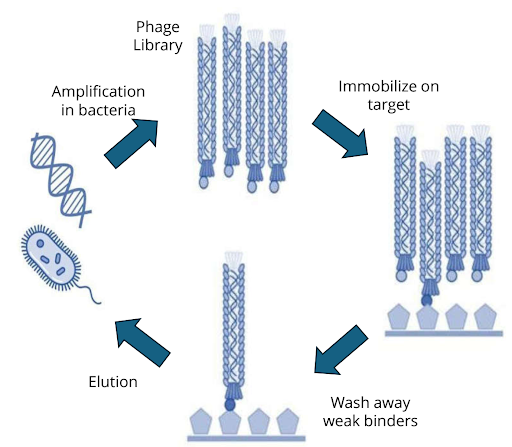
Biopanning cycle

The process of phage display screening, also known as biopanning, involves iterative rounds of affinity selection:

  1. Library incubation – A large phage display library is exposed to an immobilised target (purified protein, peptide, or even whole cells).
  2. Washing – Non-binding phages are washed away under increasingly stringent conditions.
  3. Elution – Bound phages are eluted, often by pH shift, enzymatic cleavage, or competitive ligands.
  4. Amplification – Eluted phages are amplified in E. coli, regenerating the pool for the next round.
  5. Enrichment – After 3–5 rounds, high-affinity binders are enriched and sequenced.

Figure 1: Biopanning cycle

What Is a Phage Display Library?

A phage display library is a diverse collection of bacteriophages, each presenting a unique peptide, antibody fragment, or protein variant on its surface. The diversity of a library can reach 10⁹–10¹⁰ unique members, significantly enhancing the probability of identifying rare, high-affinity binders.

Types of phage display libraries

  • Peptide libraries:
    • Synthetic libraries use randomised oligonucleotides to generate peptides with controlled diversity.
    • Natural libraries use DNA fragments from biological sources.
    • Semi-synthetic libraries combine both strategies.
  • Antibody libraries:
    • Naïve libraries are derived from B-cell repertoires of healthy donors, constructed via splice-by-overlap extension PCR, providing broad diversity.
    • Immune libraries originate from immunised donors and typically yield higher-affinity clones against the specific antigen.
    • Synthetic antibody libraries incorporate designed CDR (complementarity-determining region) sequences.
  • Fragment formats:
    • scFv (single-chain variable fragments)
    • Fab (fragment antigen-binding)
    • VH and nanobody formats

Vector systems

Applications of Phage Display

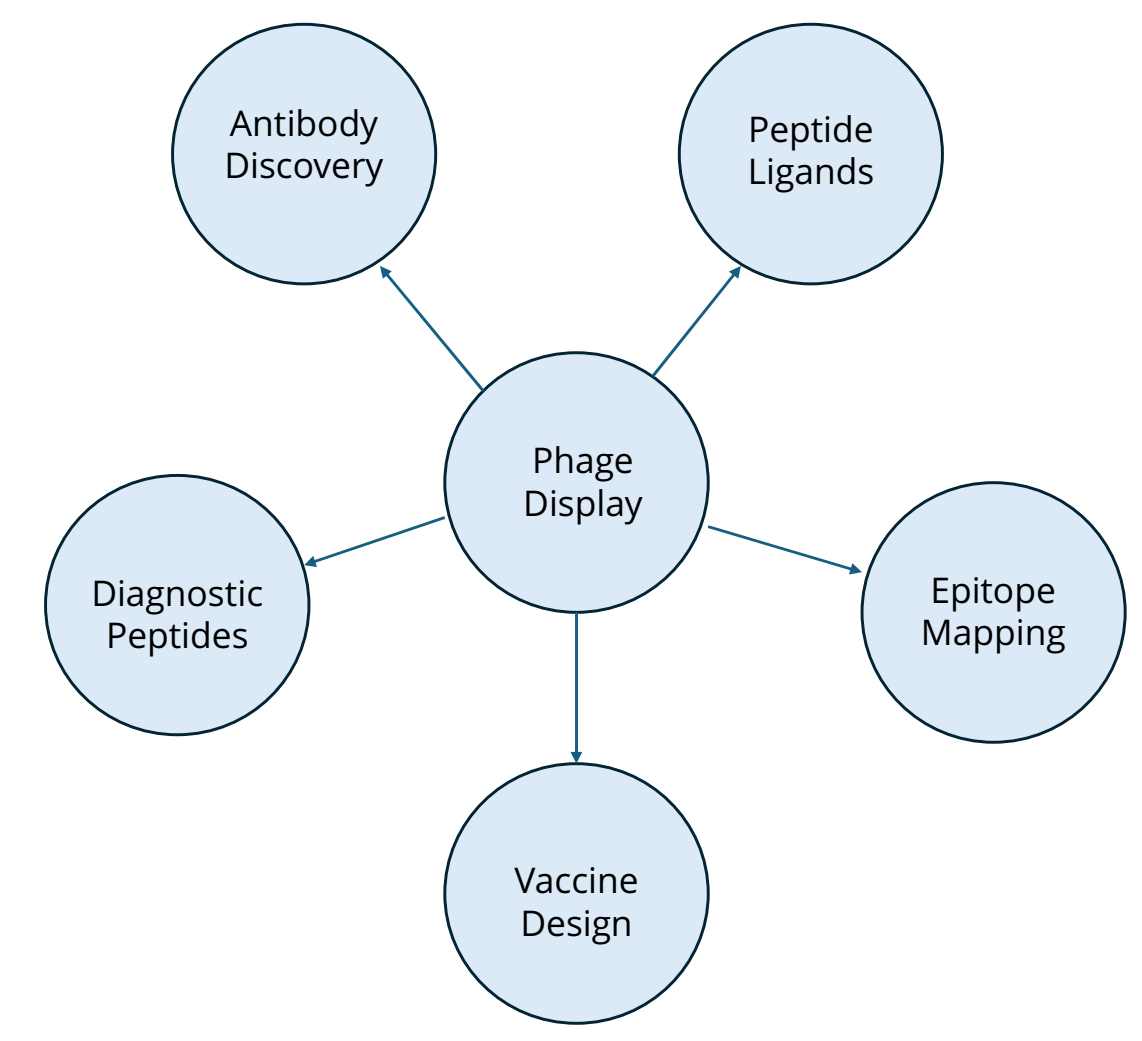
Phage display technology has broad applications across biomedical research and drug discovery:

Antibody engineering

Phage display revolutionised antibody discovery by enabling the generation of fully human antibodies without the need for hybridoma technology. Adalimumab (Humira) is a landmark product developed using phage display [1,2]. Numerous therapeutic antibodies across oncology, inflammation, and infectious diseases have since been identified using phage display antibody libraries.

Peptide ligand discovery

Phage display peptide libraries are valuable tools for identifying binding motifs against receptors, enzymes, and protein–protein interaction interfaces. Short peptide ligands discovered via phage display have been used as leads for therapeutics, diagnostics, and targeting agents.

Epitope mapping and vaccine design

Epitope mapping with phage display identifies the precise binding sites of antibodies on antigens, aiding rational vaccine design and immunodiagnostic assay development.

Emerging applications

  • Nanobody generation: Selection of VH domains and nanobody scaffolds against membrane proteins.
  • Cell-surface selection: Direct screening against intact cells for immuno-oncology targets.
  • Diagnostic peptides: For example, HER3P1 peptide has been developed for imaging HER3 expression in tumors.

Figure 2: Application of phage display

Advantages and Limitations of Phage Display

Advantages

  • Extremely large library sizes (up to ~10¹⁰ variants) 
  • Direct genotype–phenotype linkage
  • Straightforward amplification in bacteria
  • Cost-effective and scalable
  • Rapid identification of high-affinity ligands

Limitations

  • Restricted to peptides and proteins (no small-molecule diversity)
  • Post-translationally modified proteins are difficult to display
  • Large proteins may not fold correctly in the phage context
  • cDNA libraries may contain stop codons or non-functional clones

Comparison with Other Display Platforms

mRNA Display

mRNA display is a cell-free in vitro translation system where peptides are covalently linked to their encoding mRNA via puromycin [3]. Key features include:

  • Library size: Up to 10¹³ members, surpassing phage libraries.
  • Chemical diversity: Incorporation of some non-natural amino acids and macrocyclic scaffolds [4].
  • Applications: Particularly suited for targeting protein–protein interaction (PPI) interfaces.

DNA-Encoded Library (DEL) Technology

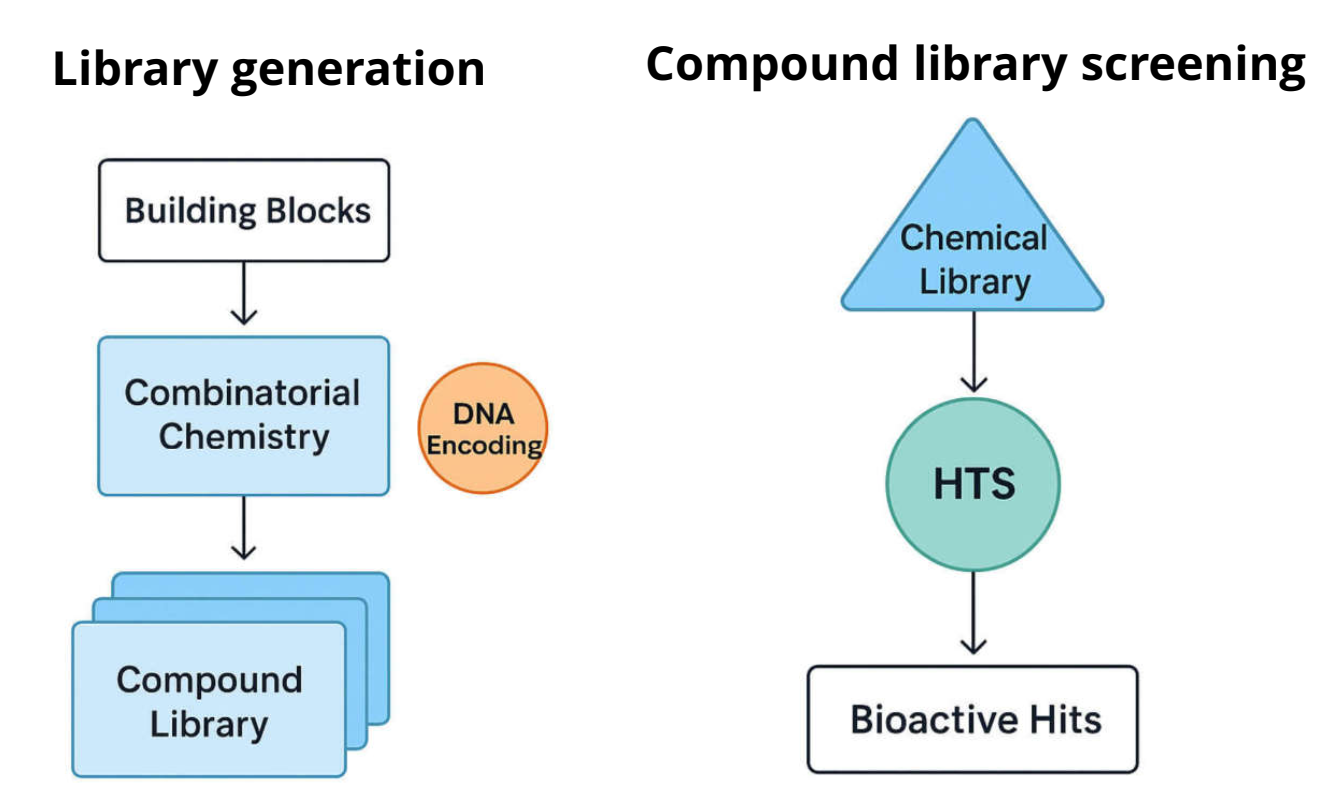
DEL combines combinatorial chemistry with DNA barcoding [5-7]. Features include:

  • Library size: 10⁶–10¹² small molecules.
  • Chemical diversity: Very high; compatible with drug-like small molecules.
  • Screening: Pooled libraries incubated with targets, followed by PCR enrichment and NGS readout [6].
  • Applications: Small-molecule discovery, especially for enzymatic targets, PPIs, and molecular glues.
  • Integration with AI/ML: Machine learning enhances predictive power and hit triaging [8].
Parameter Phage Display mRNA Display DEL Technology
Molecular class Peptides, proteins Peptides, macrocycles Small molecules and peptides
Library size 109–1011 1012–1013 106–1012
Chemical diversity Limited Moderate to high Very high
In vitro compatibility Partial Full Full
Target types Proteins, cells Proteins, PPIs Proteins, enzymatic targets, molecular glues, PPIs

Table 1: Comparative table of phage display, mRNA display, and DEL

Trends in Commercial Use and Collaboration

Pharmaceutical companies increasingly rely on collaborations with contract research organizations (CROs) and platform providers to access proprietary phage display libraries, custom library construction, and data analysis expertise. Outsourcing offers:

  • Access to validated and proprietary antibody/peptide libraries
  • Customisation for specific targets (including membrane proteins and GPCRs)
  • Data interpretation, clustering, and selectivity profiling

Integration with structure-based drug design, cryo-EM, and computational modelling further accelerates lead optimization. AI-augmented approaches, particularly in DEL screening, are increasingly being applied to phage display datasets as well.

Vipergen’s DNA-Encoded Library Screening Platform

Although this review is centred on phage display, complementary technologies such as DNA-encoded library screening services play a vital role in small-molecule discovery. At Vipergen, we provide custom DEL screening solutions with:

  • Modular library design with privileged scaffolds and novel chemotypes
  • Screening against challenging targets, including membrane proteins and in intact cells
  • Integrated SAR analysis and cheminformatics clustering
  • Multiplexed selectivity profiling against target and anti-targets

For researchers pursuing oncology, GPCR ligands, or chemical probes for validation, our DEL screening services provide a high-throughput, scalable platform that complements phage display–based biologics discovery.

See services

Conclusion

Phage display technology remains one of the most influential methods in molecular discovery. By harnessing genotype–phenotype linkage, phage display libraries enable rapid screening of billions of peptides, proteins, and antibody fragments. The method’s impact on antibody therapeutics, peptide discovery, and epitope mapping underscores its continuing relevance, even as complementary technologies such as mRNA display and DEL broaden the molecular space accessible to researchers.

As library construction methods, biopanning strategies, and computational tools evolve, phage display screening will continue to serve as a cornerstone of biologics discovery while integrating seamlessly with next-generation discovery platforms. Its combination of scalability, cost effectiveness, and clinical track record ensures that phage display remains indispensable in the next era of precision drug discovery.

References

  1. McCafferty J, Griffiths AD, Winter G, Chiswell DJ. Phage antibodies: filamentous phage displaying antibody variable domains. Nature. 1990;348(6301):552–554. https://doi.org/10.1038/348552a0
  2. Winter G, Griffiths AD, Hawkins RE, Hoogenboom HR. Making antibodies by phage display technology. Annu Rev Immunol. 1994;12:433–455. https://doi.org/10.1146/annurev.iy.12.040194.002245
  3. Roberts RW, Szostak JW. RNA–peptide fusions for the in vitro selection of peptides and proteins. Proc Natl Acad Sci USA. 1997;94(23):12297–12302. https://doi.org/10.1073/pnas.94.23.12297
  4. Huang Y, Wiedmann MM, Suga H. RNA Display Methods for the Discovery of Bioactive Macrocycles. Chem Rev. 2019;119(17):10360–10391. https://doi.org/10.1021/acs.chemrev.8b00430
  5. Peterson AA, Liu DR. Small-molecule discovery through DNA-encoded libraries. Nat Rev Drug Discov. 2023;22(9):699–722. https://doi.org/10.1038/s41573-023-00713-6
  6. Favalli N, Bassi G, Scheuermann J, Neri D. DNA-encoded chemical libraries – achievements and remaining challenges. FEBS Lett. 2018;592(17):2168-2180. https://doi.org/10.1002/1873-3468.13068
  7. Mason JW, Wang Y, et al. DNA-encoded library-enabled discovery of proximity-inducing small molecules. Nat Chem Biol. 2024;20:170–179. https://doi.org/10.1038/s41589-023-01458-4
  8. McCloskey K, Sigel EA, et al. Machine learning on DNA-encoded libraries: A new paradigm for hit-finding. J Med Chem. 2020;63(16):8857-8866. https://doi.org/10.1021/acs.jmedchem.0c00452

Do you have an inquiry?

Contact us today and explore partnership opportunities.

Get In Touch

Related Services

Service
Small molecule drug discovery for even hard-to-drug targets – identify inhibitors, binders and modulators
Molecular Glue Direct
PPI Inhibitor Direct
Integral membrane proteins
Specificity Direct – multiplexed screening of target and anti-targets
Express – optimized for fast turn – around-time
Snap – easy, fast, and affordable

Continue reading

From Target to Therapy: A Comprehensive Overview of the Drug Discovery Workflow

From Target to Therapy: A Comprehensive Overview of the Drug Discovery Workflow

Drug discovery involves a series of complex, interdisciplinary steps that transform biological insights into therapeutic agents. This review explores each phase of the drug discovery process, from target identification through to clinical trials. It emphasizes the integration of medicinal chemistry, pharmacology, and computational biology in the design, optimization, and clinical testing of new drugs. Key stages such as target validation, hit identification, lead optimization, and preclinical development are discussed, with a focus on the strategic decisions that guide the translation of molecular targets into clinically viable therapeutics.

Get In Touch

1. Introduction

The path from an initial scientific hypothesis to an approved drug remains long, risky, and costly. Modern estimates put the average timeline for developing a new drug at 12–13 years, with only 1–2 of every 10,000 screened compounds eventually reaching the market. Discovery and pre-clinical development alone can take 4–7 years, while clinical phases may last another 8–10 years. Costs are equally substantial, with recent figures ranging from $2.5–3 billion per approved drug (DiMasi et al., 2016).

Attrition remains the greatest challenge. Only ~60–70% of compounds advance beyond Phase I trials, ~30–35% of Phase II candidates succeed, and the overall probability of approval from first-in-human studies is just 10–15%. Despite significant advances in computational biology, machine learning, and high-throughput screening (HTS), the failure rate highlights the difficulty of balancing efficacy, safety, and drug-like properties.

This article provides a comprehensive overview of the drug discovery workflow, structured around traditional stages but expanded to highlight assay development, emerging technologies, and future trends. Medicinal chemistry and pharmacology remain at the core, but their integration with AI, DNA-encoded library drug discovery, and precision medicine is reshaping timelines and strategies.

2. Target Identification

Target identification is the first and most critical step in drug discovery. This phase involves selecting a biological molecule, usually a protein, that plays a significant role in disease. The ideal target should be directly implicated in disease pathogenesis, druggable, and capable of being modulated to produce a therapeutic effect without adverse effects (Overington et al., 2006).

Approaches to Target Identification

  • Genomic and Transcriptomic Technologies: Genome-wide association studies (GWAS) and RNA sequencing uncover genes or pathways associated with disease, providing insights into genetic mechanisms (Visscher et al., 2017).
  • Proteomics: Mass spectrometry–based proteomics identifies proteins altered in disease states, helping uncover new molecular targets (Aebersold & Mann, 2016).
  • Phenotypic Screening: Screening compounds in cellular or animal models allows identification of active molecules first, followed by linking to underlying targets (Vincent et al., 2022).

The challenge in this stage lies in ensuring the target is both druggable and selectively modulated by small molecules or biologics, which is essential for therapeutic viability.

3. Target Validation

Once a potential target has been identified, the next step is to validate its role in disease. This phase confirms that modulating the target yields therapeutic benefit.

Methods of Target Validation

  • Genetic Validation: Tools such as CRISPR/Cas9 and RNA interference (RNAi) allow precise knockouts or knockdowns of candidate genes, providing direct evidence of disease involvement (Moore, 2015).
  • Pharmacological Validation: Chemical probes, biologics, or small molecules are used to modulate target activity. Demonstrating efficacy in preclinical models strengthens confidence in the target (Swinney & Anthony, 2011).

Validated targets should demonstrate clear disease association, a defined mechanism of action, and the potential for selective pharmacological intervention without off-target effects (Emmerich et al., 2021).

4. Hit Identification

Following validation, researchers seek compounds that modulate the target. This stage often employs high-throughput screening (HTS), where large chemical libraries (10⁴–10⁶ compounds) are tested in automated assays. While hit rates are typically low, identifying even a few promising molecules provides starting points (Macarron et al., 2011).

Alternative Approaches to Hit Identification

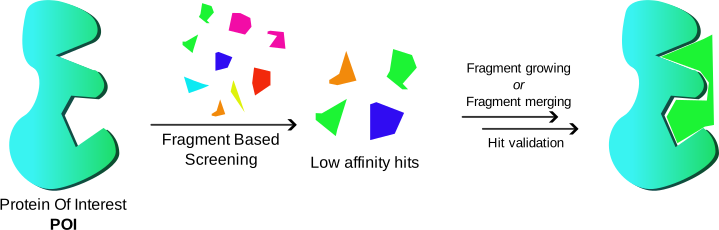
  • Fragment-Based Drug Discovery (FBDD): Screens small fragments that bind weakly to targets but can be optimized iteratively into potent compounds (Bon et al., 2022).
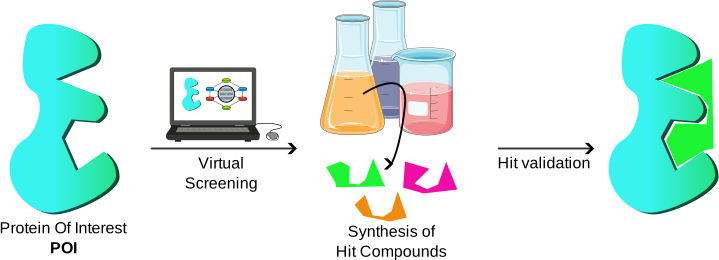
  • Virtual Screening: Computational docking and machine learning models predict binding affinity, narrowing candidates for experimental testing (Lyu et al., 2023).
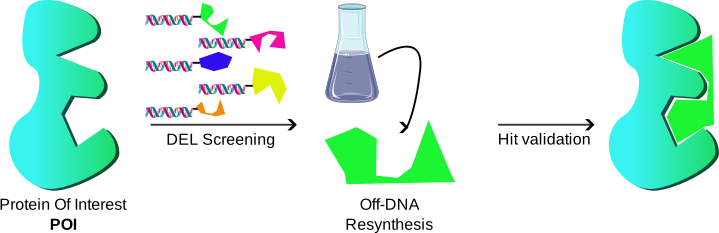
  • DNA-Encoded Library (DEL) Technology: Each compound is tagged with a DNA barcode encoding its structure. DEL enables screening of up to 10¹² molecules in a single tube, requiring minimal protein and time. This approach has become central to DNA-encoded library drug discovery (Satz et al., 2022)

5. Assay Development

Before large-scale screening or optimization, assay development ensures that biological activity and toxicity can be reliably measured. Robust assays improve hit quality and reduce false positives.

  • Types of Assays: Include biochemical assays (enzyme activity), cell-based assays (signal transduction), and phenotypic assays (functional outcomes).
  • Key Considerations: Sensitivity, reproducibility, scalability, and physiological relevance.
  • Impact on Hit Quality: Assay selection influences which hits are identified. For example, highly artificial assays may capture binders with no therapeutic potential, while physiologically relevant assays enrich for clinically translatable molecules.

According to Danaher Life Sciences, assay development is increasingly critical as drug discovery integrates HTS, DELs, and phenotypic screening.

6. Hit-to-Lead (H2L) Optimization

The hit-to-lead (H2L) stage focuses on refining hits into more potent, selective, and drug-like molecules.

Strategies for H2L Optimization

  • tructure–Activity Relationship (SAR) Studies: Synthesize analogs to explore how chemical modifications affect activity.
  • Early ADME/Toxicity Profiling: Screen candidates for solubility, permeability, metabolic stability, and cytotoxicity.
  • Optimization for Drug-Like Properties: Modify compounds to improve bioavailability, minimize off-target interactions, and enhance selectivity (Campbell et al., 2018)

Vipergen highlights how DEL hit identification can be paired with rational H2L optimization, accelerating time-to-lead compared with traditional HTS approaches.

7. Lead Optimization

Lead optimization further refines molecules for potency, safety, and pharmacokinetics.

Key Aspects

  • Stereochemistry: Enantiomeric differences can significantly impact potency or toxicity.
  • Scaffold Hopping: Replacing core molecular scaffolds while retaining binding to improve solubility or reduce off-target effects (Hu et al., 2017).
  • Pharmacokinetic Optimization: Adjust lipophilicity, design prodrugs, or shield metabolic hot spots to enhance bioavailability and reduce clearance (Ballard et al., 2013).

At this stage, medicinal chemistry and pharmacology converge to deliver candidates suitable for preclinical development.

8. Preclinical Development

Before human trials, candidates undergo extensive testing in vitro and in vivo. This stage typically lasts 3–6 years.

Components

  • Toxicology Studies: Evaluate acute/chronic toxicity, carcinogenicity, genotoxicity, and reproductive effects.
  • Pharmacokinetic Studies: Assess ADME properties to confirm expected behavior in animals.
  • Formulation Development: Optimize delivery, stability, and bioavailability.

If successful, researchers submit an Investigational New Drug (IND) application to agencies such as the FDA or EMA. Approval is required before clinical trials can begin.

9. Clinical Trials

Clinical development remains the most resource-intensive phase, often spanning 8–10 years. Trials progress through three major phases:

Phase I

  • Participants: 20–100 healthy volunteers.
  • Focus: Safety, dosage, pharmacokinetics.
  • Success Rate: ~60–70% advance to Phase II.

Phase II

  • Participants: 100–500 patients with the target disease.
  • Focus: Efficacy, dose ranging, short-term safety.
  • Success Rate: ~30–35% advance to Phase III.

Phase III

  • Participants: Thousands of patients across multiple sites.
  • Focus: Confirm efficacy, monitor long-term safety.
  • Success Rate: ~50–60% achieve endpoints and support regulatory submission.

If Phase III is successful, a New Drug Application (NDA) is filed with regulators (FDA, EMA) for approval.

10. Emerging Technologies in Drug Discovery

Artificial Intelligence and Machine Learning

AI/ML lowers costs, shortens development time, and improves predictive accuracy. Applications include:

  • Target Identification: Mining omics datasets for druggable targets.
  • Virtual Screening: Rapidly evaluating millions of compounds.

ADME/Toxicity Prediction: Modeling safety liabilities before costly in vivo work.
Challenges remain in data quality, model interpretability, and integration into regulatory workflows.

High-Throughput Screening and DNA-Encoded Libraries

Traditional HTS can test up to 10⁶ compounds but is expensive. In contrast, DEL screening covers up to 10¹² molecules per experiment, requiring nanogram protein amounts and minimal assay time. Innovations such as in-cell DEL and Vipergen’s YoctoReactor® platform enhance physiological relevance and synthetic diversity.

CRISPR and Gene Editing

CRISPR enables precise genome engineering for target validation and disease modelling. Knockout cell lines and engineered disease models reduce uncertainty about whether target modulation translates to therapeutic benefit (Cytosurge on CRISPR applications).

Precision Medicine, Generative AI, and Regulatory Acceleration

  • Precision Medicine: Stratifies patients based on genetics/biomarkers to tailor therapies (Danaher Life Sciences).
  • Generative AI: Accelerates molecular design, especially when powered by GPU-accelerated computing.

Regulatory Innovation: Pathways like priority review, conditional approval, and orphan drug designations shorten timelines for high-need therapies.

11. Conclusion

The drug discovery process is a complex, interdisciplinary journey requiring sustained collaboration between biology, chemistry, and pharmacology. While the path from target identification to clinical approval remains long—12–13 years on average—emerging technologies are beginning to reshape success rates and timelines.

Artificial intelligence, DNA-encoded library drug discovery, and CRISPR gene editing offer powerful ways to accelerate early discovery and reduce risk. Trends such as precision medicine, generative AI, and regulatory acceleration further signal a shift toward more efficient and personalized development.

Companies like Vipergen are at the forefront of these innovations, offering proprietary DEL platforms that open new chemical space and improve hit discovery efficiency. As these tools mature, the industry can expect shorter timelines, lower attrition rates, and more effective therapies for patients worldwide.

References

  • Aebersold, R., & Mann, M. (2016). Mass-spectrometric exploration of proteome structure and function. Nature, 537(7620), 347–355.
  • Ballard, P., et al. “Metabolism and Pharmacokinetic Optimization Strategies in Drug Discovery.” Drug Discovery and Development, edited by R. G. Hill and H. P. Rang, 2nd ed., Churchill Livingstone, 2013, pp. 135–155. ScienceDirect
  • Bon, M., et al. (2022). Fragment-based drug discovery-the importance of high-quality molecule libraries. Mol Oncol. 16(21), 3761-3777.
  • Campbell,I. B., et al. (2018). Medicinal chemistry in drug discovery in big pharma: past, present and future. Drug Discovery Today, 23(2), 219-234.
  • DiMasi, J. A., et al. (2016). Innovation in the pharmaceutical industry: New estimates of R&D costs. Journal of Health Economics, 47, 20–33.
  • Emmerich, C.H., et al (2021). Improving target assessment in biomedical research: the GOT-IT recommendations. Nature Reviews Drug Discovery, 20, 64–81.
  • FDA (2020). Investigational New Drug (IND) Application. U.S. Food and Drug Administration. Retrieved from https://www.fda.gov.
  • Hu, Y., et al, (2017). Recent Advances in Scaffold Hopping. Journal of Medicinal Chemistry, 60(4), 1238-1246.
  • Lyu, J., et al. (2023) Modeling the expansion of virtual screening libraries. Nat Chem Biol, 19, 712–718.
  • Macarron, R., et al. (2011). Impact of high-throughput screening in biomedical research. Nature Reviews Drug Discovery 10, 188–195.
  • Moore, J., (2015). The impact of CRISPR–Cas9 on target identification and validation. Drug discovery today, 20(4), 450-457.
  • Overington, J. P., et al. (2006). How Many Drug Targets Are There? Nature Reviews Drug Discovery, 5(12), 993–996.
  • Satz, A.L., et al. (2022) DNA-encoded chemical libraries. Nat Rev Methods Primers 2(3), 1-17. 
  • Swinney, D. C., & Anthony, J. (2011). How were new medicines discovered? Nature Reviews Drug Discovery, 10(7), 507–519.
  • Vincent, F. et al. (2022). Phenotypic drug discovery: recent successes, lessons learned and new directions. Nature Reviews Drug Discovery 21, 899–914.
  • Visscher, P. M., et al. (2017). 10 years of GWAS discovery: Biology, function, and translation. American Journal of Human Genetics, 101(1), 5–22.

Do you have an inquiry?

Contact us today and explore partnership opportunities.

Get In Touch

Related Services

Service
Small molecule drug discovery for even hard-to-drug targets – identify inhibitors, binders and modulators
Molecular Glue Direct
PPI Inhibitor Direct
Integral membrane proteins
Specificity Direct – multiplexed screening of target and anti-targets
Express – optimized for fast turn – around-time
Snap – easy, fast, and affordable

Continue reading

High-Throughput Screening in Drug Discovery

High-Throughput Screening (HTS): Accelerating Drug Discovery

Drug discovery is a search problem at massive scale: biology is complex, chemical space is enormous, and timelines are unforgiving. The challenge isn’t just finding active compounds — it’s finding reproducible, mechanism-relevant starting points fast enough to justify the next wave of chemistry and biology.

Get In Touch

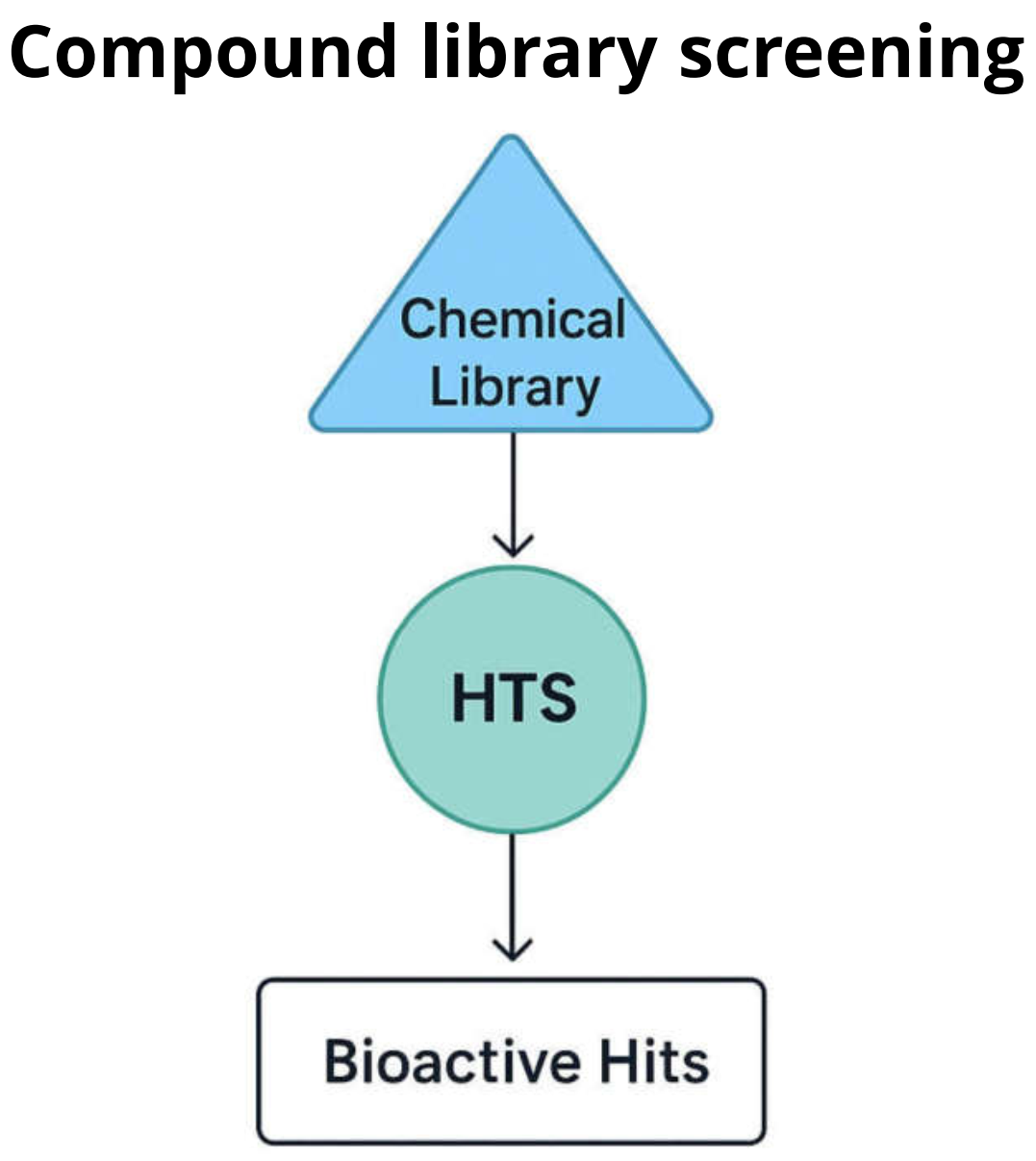
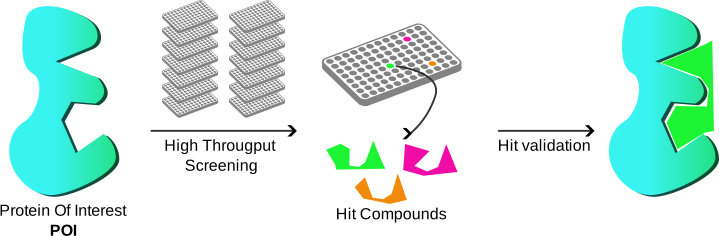
High-throughput screening (HTS) is the workhorse approach for that early decision-making. In drug discovery high-throughput screening, automated platforms test hundreds of thousands to millions of compounds against a biological target or cellular phenotype to identify “hits” worth follow-up. By combining miniaturized assays in microplates with robotics, sensitive detection, and data analytics, HTS compresses months of manual work into days to weeks and generates quantitative starting points for hit-to-lead optimization.

Why HTS matters: HTS enables standardized experimentation at scale — so teams can triage chemical matter earlier, reduce downstream attrition, and focus resources on the most promising chemotypes.

What is High-Throughput Screening?

High-throughput screening (HTS) is a systematic, automation-driven method for identifying biologically active compounds by testing very large libraries against a target (e.g., an enzyme or receptor) or a cellular phenotype. The primary goal is hit discovery: finding reproducible chemical starting points that can be optimized into leads through medicinal chemistry and iterative biology.

HTS is widely used across pharmaceutical and biotech R&D, CROs, and academic screening centers to prioritize the most promising candidates early—especially when the mechanism is well-defined (target-based screening) or when a phenotype provides the best disease-relevant readout (phenotypic screening).

In practice, HTS miniaturizes assays into microplates and uses robotics for dispensing, incubation, and detection. Software then normalizes results, applies quality-control statistics (e.g., Z′), and flags “hits” for confirmation, orthogonal testing, and early structure–activity relationship (SAR) learning.

Related technologies: DNA-Encoded Library Screening 

A Brief History of HTS

Since the emergence of HTS in the early 1990s, the screening collections have grown from 50-100,000 compounds to several million today (TheScientist 2024). Screening compound collections of this size is challenging, and efficient automation and organization are essential for successful HTS campaigns. 

The integration of robotics, miniaturization, and powerful data analytics tools has made HTS a staple in pharmaceutical research and development (R&D), particularly among organizations aiming to achieve high-efficiency lead generation while minimizing resource expenditure. 

A typical HTS campaign, from target validation to hit confirmation, can take anywhere from several weeks to a few months, depending on the complexity of the assay, the size of the compound library, and the level of automation employed. In well-established platforms, timelines as short as 4–6 weeks from assay readiness to hit confirmation are possible.

How HTS Works: Core Concepts and Workflow

An HTS campaign succeeds when biology (target/assay), chemistry (libraries), automation (execution), and analytics (hit triage) are designed as a single system. Below are the core building blocks, followed by the end-to-end workflow most screening platforms follow.
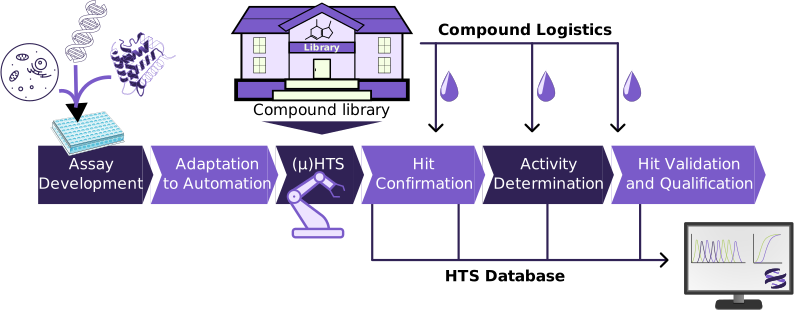
Figure 1: Overview of the HTS workflow

Core concepts in HTS

Compound libraries provide the chemical diversity to discover new starting points. Targets define what “activity” means biologically. Assays translate biology into a measurable signal, and hit identification/validation separates true actives from artifacts using confirmation, orthogonal methods, and early SAR.

Step-by-step HTS workflow

1) Target selection and validation

Targets are chosen based on disease relevance, druggability, and feasibility of building a robust assay. Validation typically combines genetic/clinical evidence, pathway context, and tool molecules or reference ligands to confirm that modulating the target produces a meaningful biological effect.

2) Assay development and optimization

Assay design defines the readout (biochemical vs. cell-based, endpoint vs. kinetic) and the detection modality (e.g., fluorescence, luminescence). Optimization focuses on robustness and scalability: selecting controls, confirming DMSO tolerance, minimizing edge effects, and tuning conditions to achieve strong signal windows. Screening teams commonly track assay performance with metrics like Z′-factor, signal-to-background, and coefficient of variation. Z′-factor is a standard robustness metric in HTS; values closer to 1 indicate better separation between positive and negative controls (often ≥0.5 is considered excellent for screening, Zhang 1999).

3) Compound library selection and management

Libraries may be diverse (“discovery”) or target-focused (e.g., kinase sets, covalent fragments, CNS subsets). Practical success depends on logistics: compound identity/purity verification, solubility and stability in DMSO, barcoding/plate maps, storage conditions, and “cherry-pick” traceability for follow-up testing.

4) Plate setup and compound dispensing

Compounds are formatted into assay-ready plates (often 384- or 1536-well) using acoustic dispensing, pin tools, or automated pipetting. Plate design includes controls, replicates, and sometimes concentration series. Sealing, humidity control, and standardized timing reduce evaporation-driven artifacts.

5) Primary screen execution

Automation coordinates dispensing, incubation, and readout across thousands of wells with minimal human intervention. Environmental consistency (temperature, CO₂ for cells, incubation times) and batch monitoring are critical to reduce drift and improve reproducibility.

6) Data acquisition and processing

Detection instruments generate raw signals that are normalized to controls, quality-checked, and transformed into activity scores. Pipelines flag outliers, compute plate QC, and apply hit-calling thresholds (often followed by curve fitting when concentration-response data are available).

7) Hit confirmation and prioritization

Putative hits are retested (often from fresh material) to confirm reproducibility, followed by dose–response curves to estimate potency. Orthogonal assays and counterscreens help eliminate detection interference, aggregation, and non-specific toxicity. Confirmed hits are prioritized using early SAR, selectivity profiling, and preliminary developability checks (e.g., solubility, stability, basic ADME flags). Because primary-screen hit rates are often well under 1% (and sometimes far lower), confirmation and orthogonal validation are essential to avoid chasing artifacts.
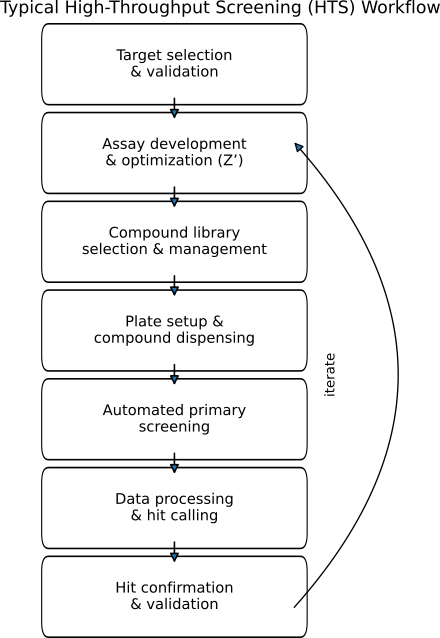
Figure 2: Flowchart of the high-throughput screening (HTS) workflow: target selection and validation → assay development and optimization → compound library selection and management → plate setup and compound dispensing → automated primary screening → data processing and hit calling → hit confirmation and validation, with iteration back to assay optimization.

Key Technology & Instrumentation

HTS platforms combine miniaturized assay formats with automation and high-sensitivity detection. While exact setups vary by assay type, most screening centers rely on the same core technology stack:

Microplates and miniaturization

Modern HTS typically uses 96-, 384- and 1536-well plates (with specialized formats for ultra-miniaturization). Smaller volumes reduce reagent cost per data point and increase throughput, but demand tighter control of evaporation, mixing, and timing.

Liquid handling and dispensing systems

Automation starts with accurate dosing: tip-based liquid handlers, bulk dispensers for reagents, and low-volume tools (e.g., acoustic dispensing or pin tools) for transferring compounds. These systems standardize timing and reduce variability compared to manual pipetting.

Plate readers and detection modalities

Readout choice determines which instrument you need and what artifacts to watch for. Common modes include:

    • Fluorescence intensity (FI): sensitive, widely used for binding and enzymatic assays.
    • Luminescence (LUM): high sensitivity with low background (often luciferase-based).
    • Absorbance (ABS): straightforward optical density measurements for many enzyme reactions.
    • FRET / TR-FRET: proximity-based fluorescence; TR-FRET reduces background by time-gating.
    • BRET: proximity readout driven by bioluminescence rather than excitation light.
    • AlphaScreen/AlphaLISA: bead-based proximity assays that work well for difficult targets.

Automation platforms and environmental control

Integrated systems may include robotic arms, plate stackers/carousels, incubators (temperature/CO₂/humidity), sealers/peelers, and scheduling software to run assays consistently—often around the clock.

High-content screening (HCS) systems

High-content screening (HCS) is often considered a subset/adjacent approach to HTS: instead of a single signal per well, HCS uses automated microscopy and image analysis to quantify multi-parameter cellular phenotypes (e.g., morphology, localization, pathway markers). HCS is especially valuable for complex biology, but typically increases data volume and analysis complexity.

HTS vs. HCS (high-content screening): HTS and HCS share automation and microplate workflows, but they differ in readout complexity and analysis burden.

Feature HTS HCS
Primary readout One signal per well (e.g. FI, LUM, ABS) Image-based, multi-parameter cellular features
Typical use Rapid hit finding in large scale Mechanism- and phenotype-rich screening, complex biology
Data volume High Very high (data-heavy)
Analysis Statistics and curve fitting Computer vision and ML-based feature extraction
Strength Throughput + cost per datapoint Physiological relevance and rich biology

Informatics (LIMS/ELN) and data analysis software

Because HTS produces large, plate-structured datasets, informatics is not optional. LIMS/ELN tools track sample provenance, plate maps, concentrations, and QC metrics across runs. Analytics pipelines handle normalization, curve fitting, outlier detection, hit calling, and reporting—enabling faster triage and more reproducible decision-making.

Compound Libraries in HTS: Design, Synthesis, and Management

The success of an HTS campaign depends as much on the library as the assay. Libraries can be built in-house or sourced commercially, and are typically curated to balance chemical diversity, developability, and screening robustness.

Libraries are either generated by in-house laboratories or by purchasing commercially available compound collections. A high-quality chemical library will have the following features:

  • Chemical diversity & coverage: Broad scaffold and shape diversity (including 3D-rich/ sp³ content) to maximize novel chemotypes while maintaining clusters of close analogs for rapid SAR.
  • Drug-like property profile: Filtered for desirable ranges (e.g., MW, clogP, HBD/HBA, TPSA) tailored to the target class; include subsets (fragment-, lead-, and probe-like).
  • Quality & identity control: Verified purity/identity (LC-MS/NMR), low salts/residual reagents, and robust metadata (SMILES, stereochemistry, batch history).
  • Liability filtering: Removal of PAINS, frequent hitters, redox cyclers, covalent/reactive moieties (unless intentional), chelators, and aggregators; include counterscreen flags.
  • Solubility & stability: DMSO compatibility, precipitation checks, controlled water content, and policies to minimize freeze–thaw cycles; stability monitoring over time.
  • IP and novelty: Preference for synthetically accessible, novel scaffolds with freedom-to-operate and avenues for follow-up chemistry.
  • Biology-aware subsets: Target-class or modality-enriched panels (kinase-focused, PPI, CNS-penetrant, covalent warheads) to boost hit relevance.
  • Automation-ready formatting: Standardized plate formats (384/1536), barcoding, tracked concentrations/volumes, and plate maps with control wells.
  • Data & logistics: LIMS integration, cherry-pickability, replenishment strategies, and provenance auditing—crucial for reproducibility and scale.

Library synthesis and evolution: Many modern HTS collections are built using combinatorial and diversity-oriented synthesis to generate broad scaffold coverage at scale. Key challenges include maintaining purity and identity across thousands of compounds, increasing 3D/sp³-rich diversity (to avoid overly “flat” chemical space), and ensuring compounds remain soluble and stable during storage and repeated handling. As a result, many organizations pair experimental curation with computational design to target underrepresented regions of chemical space while preserving tractable follow-up chemistry.

Despite the scalability of this method, there are significant challenges:

  • Achieving High Purity: With automated synthesis and scale, maintaining consistent purity across thousands of compounds is difficult. Impurities can interfere with assay results and lead to false positives or negatives.
  • 3D Diversity and Stereochemistry: Traditional combinatorial libraries often result in flat, aromatic-rich compounds. There is a growing emphasis on incorporating 3D structural diversity to better mimic natural ligands, improve bioavailability, and reduce attrition rates.
  • Novel Scaffolds: Generating libraries with novel scaffolds, rather than just variations on known drugs, remains a key challenge to unlock unexplored chemical space.
  • Cost and Logistics: Synthesizing, validating, storing, and reformatting HTS libraries for screening can be costly and logistically intensive, especially for startups with limited infrastructure.

To address these issues, some companies are turning to diversity-oriented synthesis (DOS) and leveraging AI-driven library design tools to predict and prioritize structurally and functionally rich chemical spaces.

HTS Across the Drug Discovery Pipeline

HTS contributes across multiple phases of discovery — from confirming target biology to generating and refining lead series. In practice, teams use HTS screening differently depending on where they are in the pipeline:

1) Target identification and validation

HTS can support target validation by testing tool compounds, reference ligands, or focused libraries to confirm that modulating a target produces the expected biological effect. In phenotypic settings, screening can also help connect pathway perturbations to actionable targets through follow-up deconvolution.

2) Lead discovery and hit identification

This is HTS’s primary role: running large-scale small molecule screening to identify initial “hits” from diverse or target-focused libraries, followed by confirmation and orthogonal assays to remove artifacts.

3) Lead optimization and SAR development

After hits are confirmed, iterative screening of close analogs (often in dose–response format) accelerates structure–activity relationship (SAR) learning. Secondary and counterscreen panels are used to improve potency, selectivity, and developability while reducing false-positive mechanisms.

Applications in Drug Discovery

HTS is used in a wide range of discovery applications, including:

  • Hit identification: Primary screens reveal active compounds against a biological target.
  • Lead optimization: Iterative screening of compound analogs refines efficacy, potency, and ADMET properties.
  • Target deconvolution: In phenotypic screens, HTS helps elucidate the mechanism of action of active compounds.
  • Mechanistic studies and pathway profiling: HTS enables systematic study of compound effects on signaling pathways or gene expression.
  • Functional genomics: Identifying genes that play roles in specific pathways and understanding gene functions. 
  • Toxicology: Identifying potential toxicity of entire compound libraries.

HTS provides a competitive advantage by enabling rapid hypothesis testing, reducing time-to-discovery, and enhancing the quality of candidate selection. By leveraging public HTS data repositories like PubChem BioAssay, smaller firms can also validate in-house findings or expand SAR understanding.

Real-world example of HTS success

A classic HTS success is ivacaftor (VX-770) for cystic fibrosis. Vertex screened ~228,000 small molecules in a cell-based fluorescence assay to find CFTR “potentiators,” then optimized hits into VX-770, which increased CFTR channel open probability and restored chloride transport in vitro. Clinical studies confirmed benefit for patients with gating mutations (e.g., G551D), leading to the first CFTR-modulator approval in 2012. This path—from HTS hit to approved precision therapy—is documented in primary papers and regulatory/web sources (Van Goor 2009, Vertex 2012).

Advantages and Benefits of High-Throughput Screening

When assays are well-optimized and libraries are well-curated, HTS offers several practical advantages in early discovery:

  • Speed and efficiency: rapidly tests large libraries to identify starting points earlier in the pipeline.
  • Lower cost per data point: miniaturization and automation reduce reagent use and per-well labor.
  • Access to novel chemical starting points: diverse libraries increase the chance of finding new chemotypes.
  • Reduced manual labor and improved reproducibility: standardized automation reduces human error and variability.

Better prioritization under uncertainty: quantitative screening + early SAR improves decision-making before expensive in vivo work.

Challenges and Limitations of High Throughput Screening

HTS trades depth-per-experiment for breadth and standardization. The most common pitfalls fall into assay artifacts, data complexity, operational cost, and library representativeness—so successful campaigns plan for triage and validation from day one.

False positives, false negatives, and assay artifacts

High-volume screens are vulnerable to artifacts that inflate activity (false positives) or mask it (false negatives). Common causes include compound aggregation, auto-fluorescence, fluorescence quenching, redox cycling, and interference with reporter systems (e.g., luciferase inhibition). Robust controls, orthogonal readouts, counterscreens, and confirmation from fresh material are essential to separate true biology from signal interference.

Data Overload and Interpretation

A single campaign can generate millions of datapoints across plates, replicates, timepoints, and conditions—especially when imaging or multi-parameter readouts are used. Without standardized normalization, plate/QC monitoring, and reproducible pipelines for hit calling and curve fitting, teams can either miss real actives (over-filtering) or chase noise (under-filtering). This is why HTS groups invest heavily in informatics, statistical QC, and clear triage criteria before screening begins.

High initial setup cost and operational complexity

HTS requires significant upfront investment in robotics, detection hardware, environmental control, and trained staff. Even when the per-well cost is low, the platform-level cost can be a barrier for smaller teams—driving interest in partnerships, CRO models, or complementary approaches like DEL or virtual screening.

Limited biological context

Many assays simplify biology to achieve throughput, which can reduce physiological relevance. This is one reason phenotypic screening, organoids/3D models, or follow-up validation in more complex systems are increasingly used to improve translation.

Limited chemical diversity (in some libraries)

Not all libraries represent chemical space equally. Some collections over-index on historically “easy-to-make” scaffolds (flat aromatics) or contain clusters of similar chemotypes, which can bias hit discovery and reduce novelty. Libraries can also underrepresent certain target-relevant features (e.g., 3D shape, polarity ranges, covalent warheads, macrocycles). Improving diversity often requires deliberate design choices, periodic refresh, and inclusion of modality- or target-class-enriched subsets.

Quality Control Measures

Quality control (QC) safeguards the credibility of high-throughput screening data; without it, projects burn time and budget chasing artifacts. QC typically spans two buckets: plate-based and sample-based controls. Plate-based controls assess how each plate performs and flag assay problems—think pipetting mistakes or “edge effects” from evaporation at perimeter wells. Sample-based controls track variability in biological response or compound potency across runs. A common metric is the minimum significant ratio (MSR), which quantifies assay reproducibility and the degree to which control or sample potencies differ between experiments.

PAINS (Pan-Assay Interference Compounds)

A persistent challenge in HTS is the presence of pan-assay interference compounds (PAINS). These are compounds that produce false positives across multiple assay types due to their chemical reactivity, aggregation, redox activity, or interference with assay detection mechanisms (Baell 2018). PAINS can skew screening results, misdirect follow-up efforts, and waste valuable resources.

Identifying and filtering out PAINS early in the screening process is crucial. Computational filters and curated substructure databases are used to flag known PAINS motifs. However, these tools are not foolproof, and careful experimental validation remains necessary. Companies must balance the risk of excluding potentially valuable compounds with the need to eliminate confounders that undermine screening fidelity.

Educating screening scientists and medicinal chemists about PAINS and investing in robust triaging strategies can dramatically improve hit quality and downstream success rates.

Alternative Screening Approaches:

DNA-Encoded Library (DEL) Screening

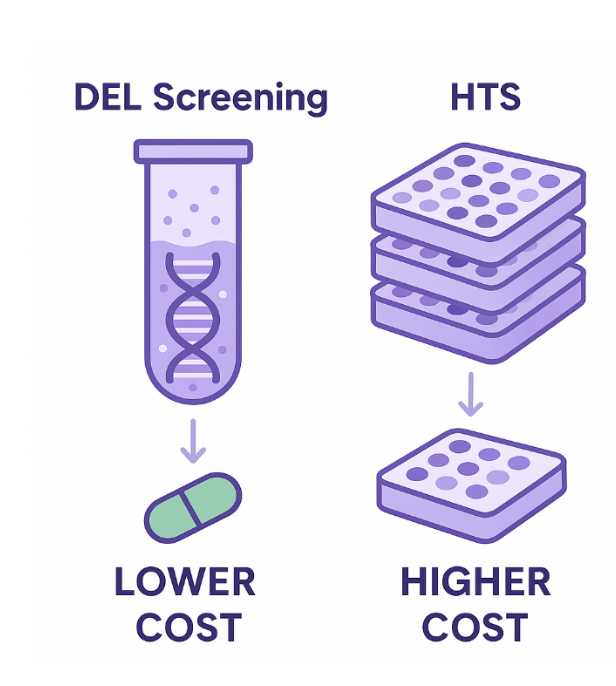
DEL technology allows the screening of billions of compounds by tagging each with a DNA barcode, enabling solution-phase binding assays and rapid hit identification. One of the major advantages of DEL is its significantly lower cost compared to HTS, both in terms of library acquisition and operational expenses. DEL libraries can be synthesized or accessed through partnerships at a fraction of the cost of traditional HTS libraries. Moreover, DEL screening is conducted in a single reaction tube, eliminating the need for hundreds or thousands of microtiter plates, complex automation, and high-throughput robotics. This makes the overall setup far simpler and more accessible for e.g. small biotech firms or early-stage discovery labs.

  • Screens billions of DNA-barcoded compounds in solution-phase binding selections
  • Lower cost per “virtual compound” compared with plate-based HTS
  • Requires off-DNA resynthesis + follow-up functional assays to confirm activity
  • Best for: fast binder discovery, very large chemical space exploration
Fragment-Based Drug Discovery (FBDD)

FBDD involves screening low molecular weight compounds— “fragments”—that bind to a target with weak affinity but high specificity. Though individually less potent than typical HTS hits, these fragments serve as efficient starting points for lead optimization. Detection typically requires sensitive biophysical techniques such as NMR spectroscopy, surface plasmon resonance (SPR), or X-ray crystallography. A key advantage of FBDD is its efficiency: smaller libraries (often in the range of hundreds to a few thousand compounds) can yield highly novel chemical matter with desirable drug-like properties. 

Virtual Screening

Computational models simulate interactions between compounds and targets, prioritizing candidates for experimental validation.

Phenotypic Screening

Uses whole-cell or whole-organism systems to identify compounds that produce a desired phenotype, often leading to first-in-class drugs.

Integration with Multi-Omics and Systems Biology

As the complexity of therapeutic targets grows, the integration of high-throughput screening with multi-omics approaches (e.g., genomics, transcriptomics, proteomics, metabolomics) offers a more comprehensive understanding of drug-target interactions and downstream effects. By mapping screening hits to omics datasets, researchers can:

  • Identify off-target activities or biomarkers associated with compound response
  • Elucidate the mechanism of action with greater precision
  • Predict efficacy across patient subtypes using systems biology models

Moreover, combining HTS results with transcriptomic or proteomic data can uncover pathway-level perturbations and reveal synergistic interactions in polypharmacology approaches. This integrative strategy not only supports more informed hit prioritization but also aligns with precision medicine objectives (Meissner 2022).

Future Trends in High-Throughput Drug Discovery

HTS is evolving beyond “faster plates” into smarter experimentation — combining automation, richer biology, and predictive analytics to reduce false positives, de-risk hits earlier, and prioritize chemistry that is more likely to translate.

Integration with AI and machine learning

AI is increasingly used to improve HTS decision-making at multiple points: identifying assay interferents, improving hit calling, prioritizing which hits to retest first, and predicting which chemotypes are most likely to survive follow-up validation. In more advanced workflows, active-learning loops can propose the next set of compounds to test, accelerating SAR development while reducing the number of experiments needed (Boldini 2024). 

Miniaturization and ultra-HTS (microfluidics, picoliter volumes)

Traditional HTS relies on 384–1536 well plates, but ultra-HTS pushes miniaturization into microfluidic droplets that act like tiny reaction vessels (often pico- to nanoliter volumes). These approaches can massively increase throughput and reduce reagent costs, while enabling single-cell or rare-event assays that are hard to run in plates (Yang 2025, Das 2025). 

Organ-on-a-chip, organoids, and 3D cell cultures

More physiologically relevant models — including organoids, 3D cultures, and high-throughput organ-on-a-chip (OoC) systems — are being integrated into screening to improve translatability. These platforms aim to bridge the gap between simplified in vitro assays and in vivo outcomes by capturing tissue-level behavior (e.g., barrier function, flow, multicellular interactions) in scalable formats (Song 2024, Leung 2022). 

Label-free screening technologies

Label-free approaches reduce dependence on fluorescent or luminescent reporters and can provide more direct biochemical readouts. Two areas gaining momentum are:

  • Biosensors (optical/electrochemical/piezoelectric) for real-time binding and kinetic measurements (Chieng 2024).
  • Mass spectrometry–based screening (e.g., rapid injection or acoustic ejection MS) that can quantify substrates/products without labels and can reduce assay artifacts linked to reporters (Smith 2025, Winter, 2023).

Phenotypic screening revival powered by high-content screening

Phenotypic screening is resurging as imaging, automation, and analysis improve. High-content screening (HCS) enables multi-parameter cellular profiling at scale, and modern image analysis (often ML-assisted) helps teams connect phenotypes to mechanisms and prioritize hits with stronger biological relevance (Seal 2024, Subramani 2024).

Quantum computing (longer-term potential)

Quantum computing is still early for most discovery teams, but it may eventually impact drug discovery through faster molecular simulation and quantum machine learning approaches for high-dimensional prediction tasks. Near term, it is best viewed as an emerging capability rather than a standard HTS tool (Danishuddin 2025, Banait 2025). 

Conclusion

High-throughput screening remains one of the fastest ways to turn biological hypotheses into validated chemical starting points — especially when assay quality, library design, automation, and data triage are engineered as a single workflow. As HTS evolves toward AI-assisted analytics, ultra-miniaturization, label-free readouts, and more physiologically relevant models (3D systems and organ-on-a-chip), the winners will be the teams that can generate clean hits and learn reliable SAR quickly.

Vipergen supports discovery teams with scalable screening strategies utilizing the complementary approach of DNA-encoded library (DEL) screening, helping reduce uncertainty early and accelerate the path from target to lead. If you’re planning a screening campaign, consider aligning assay design, library strategy, and confirmation methods upfront to maximize signal quality and downstream success.

FAQ

  • How does high-throughput screening work?

    HTS compresses many small, well-controlled experiments into microplates (typically 384–1536 wells) so thousands to millions of compounds can be tested quickly. Assay mixes (enzyme, cell, or target) are dispensed with controls, compounds are added, and automated readers quantify responses (fluorescence, luminescence, absorbance, imaging). Robust statistics (e.g., Z’-factor) ensure assay quality, while normalization and hit-calling thresholds flag “actives.” Follow-up steps include hit confirmation (retakes, counterscreens), dose–response curve fitting, and orthogonal/biophysical validation to weed out artifacts and enrich true, mechanism-relevant starting points for medicinal chemistry.

  • What equipment is needed for HTS?

    A modern HTS setup combines: diverse, well-curated compound libraries; high-density microplates; acoustic or tip-based liquid handlers; dispensers; robotic plate movers; environmental control (incubators, CO₂, humidity), plate sealers/peelers; multimode readers (fluorescence, luminescence, absorbance), imagers for HCS; and barcoding. Supporting infrastructure includes secure compound storage (cherry-picking, tube/plate stores), on-deck QA (pin-tool verification), data systems (LIMS/ELN), and analytics pipelines for QC metrics, curve fitting, and hit triage. Optional add-ons—cell handlers, automation schedulers, and miniaturization to 1536- or 3456-well—boost throughput while reducing reagent costs.
  • What are the differences between HTS and DEL screening?

    HTS evaluates discrete, physical compounds one well at a time, directly observing assay responses; it excels when you need quantitative pharmacology (potency, efficacy) early and when cell-based phenotypes or complex readouts matter. DNA-encoded library (DEL) screening binds ultra-large, DNA-barcoded mixtures to a target, washes away non-binders, and identifies enriched chemotypes by DNA sequencing. DEL campaigns are typically faster and cheaper per compound and explore far larger chemical space but primarily report binders requiring off-DNA resynthesis and follow-up assays. For an overview, see Vipergen’s technology page

  • What alternatives exist for high-throughput screening?

    Beyond classical HTS, teams mix complementary methods to balance speed, cost, and confidence. DNA-encoded libraries (DELs) enable ultra-large, low-cost binder discovery by sequencing enriched barcodes after target selection; they excel at exploring vast chemical space early, with off-DNA resynthesis and follow-up assays confirming function. Virtual/AI-guided screening (ligand/structure-based docking) triages candidates in silico. Fragment-based discovery uses biophysics to grow weak binders into leads. Affinity-selection mass spectrometry (ASMS) rapidly finds binders from mixtures. Biophysical assays (SPR, MST, DSF, NMR) provide orthogonal validation, while phenotypic/genetic screens (HCS imaging, pooled CRISPR) reveal pathway-level effects. Combining approaches—e.g., DEL/virtual triage → focused HTS → biophysical confirmation—often works best.

Glossary of HTS Terms

  • Z′-factor (Z-prime): Assay quality metric based on signal window and variability; values closer to 1 indicate a more robust assay (often, ≥0.5 is considered excellent).
  • IC50: Concentration of an inhibitor that reduces activity by 50%.
  • EC50: Concentration of an activator/agonist that produces 50% of the maximal effect.
  • SAR (Structure–Activity Relationship): Relationship between chemical structure changes and changes in biological activity.
  • LIMS: Laboratory Information Management System for tracking samples, plates, results, and provenance.
  • ELN: Electronic Laboratory Notebook for experimental records and workflows.
  • FRET / TR-FRET: Proximity-based fluorescence readouts; TR-FRET uses time-resolved detection to reduce background.
  • BRET: Proximity readout driven by bioluminescence rather than excitation light.
  • PAINS: Pan-assay interference compounds that frequently cause false positives due to assay interference mechanisms.
  • Orthogonal assay: A follow-up assay using a different readout to confirm true activity.
  • Counterscreen: Assay designed to detect artifacts or off-target activity (e.g., reporter interference).
  • ADMET: Absorption, distribution, metabolism, excretion, and toxicity.

References

Do you have an inquiry?

Contact us today and explore partnership opportunities.

Get In Touch

Related Services

Service
Small molecule drug discovery for even hard-to-drug targets – identify inhibitors, binders and modulators
Molecular Glue Direct
PPI Inhibitor Direct
Integral membrane proteins
Specificity Direct – multiplexed screening of target and anti-targets
Express – optimized for fast turn – around-time
Snap – easy, fast, and affordable

Continue reading

Revolutionizing Research with Chemical Libraries

Chemical Libraries: Types, Design Strategies and Applications in Drug Discovery

Get In Touch

Introduction to Chemical Libraries

Chemical libraries have become indispensable tools in modern research, particularly in the fields of chemical biology, pharmaceutical development, and materials science. At their core, a chemical library is a systematically organized collection of stored chemical compounds, most often small molecules, each annotated with essential information such as chemical structure, purity, quantity, and physicochemical characteristics. These libraries are designed to be screened rapidly against biological targets, typically through high-throughput screening (HTS), to identify bioactive molecules that can serve as starting points for drug discovery or as chemical probes for basic research.

The fundamental purpose of a chemical library is to maximize the exploration of chemical space. By sampling a diverse and extensive set of molecular entities, researchers significantly increase the probability of finding a “hit” compound—one that shows measurable activity against a given target or in a particular biological system. Greater diversity generally translates into higher hit rates, as the range of potential binding interactions with proteins, nucleic acids, or cellular pathways is expanded.

High-throughput screening is closely tied to the use of chemical libraries. HTS technologies allow tens of thousands, or even millions, of compounds to be tested rapidly against a defined target. This process accelerates lead identification, the critical first stage of transforming an initial hit into a lead compound with optimized activity and drug-like properties. Together, chemical libraries and HTS have become cornerstones of early-stage drug discovery, significantly reducing the time and resources required to progress from target identification to the generation of viable lead candidates.

Types of Chemical Libraries

The development of different classes of chemical libraries reflects the evolving needs of research and the availability of new technologies. The following categories illustrate the range of strategies used to explore chemical space.

Diverse (Combinatorial) Chemical Libraries

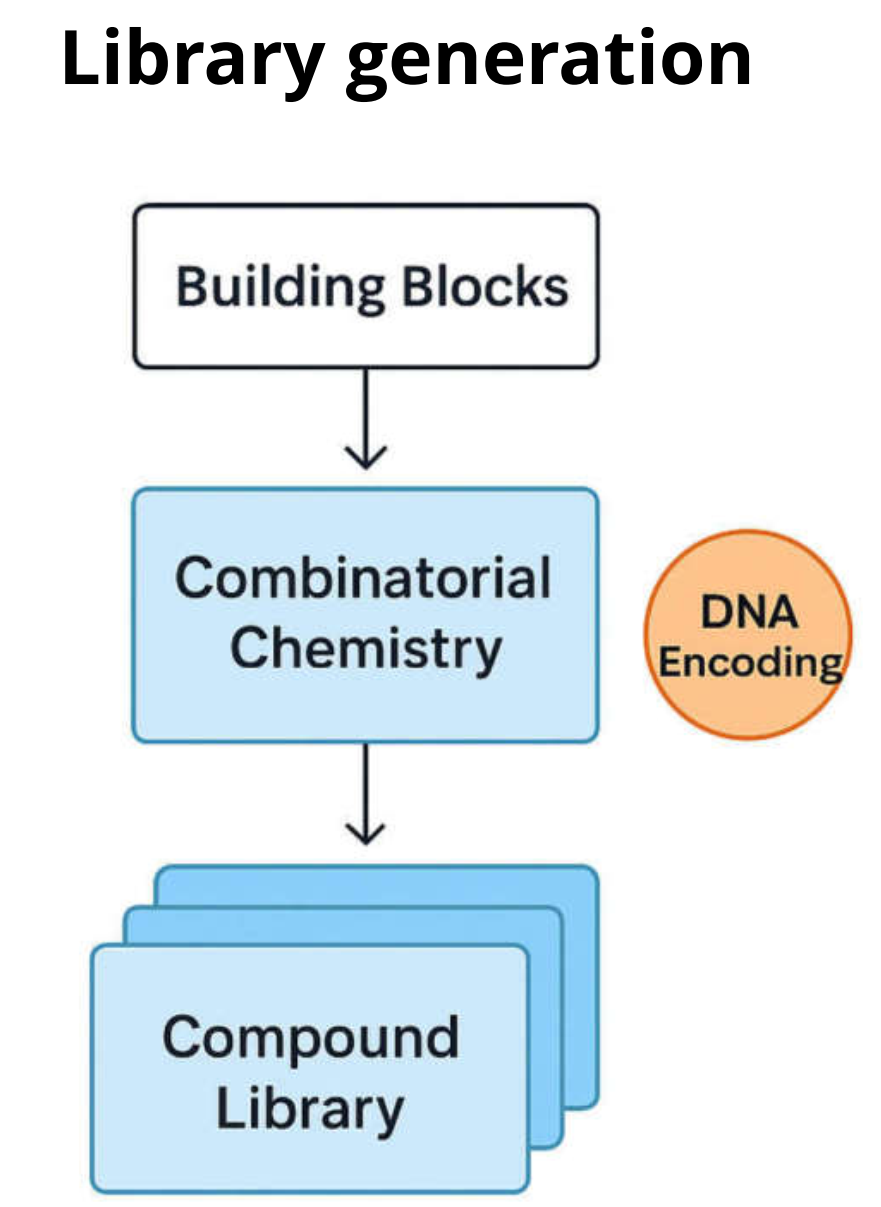
Combinatorial chemical libraries are among the most widely recognized formats. They are created through combinatorial chemistry, a technique that systematically combines sets of chemical building blocks in all possible combinations. This approach generates vast collections of structurally diverse compounds that can cover large regions of chemical space.

Such libraries often include drug-like, lead-like, peptide-mimetic, or natural-product-like molecules, depending on the building blocks selected. Their strength lies in sheer scale and diversity, which makes them particularly useful for broad exploratory compound library screening campaigns in pharmaceutical pipelines.

DNA-Encoded Chemical Libraries (DELs)

DNA-encoded chemical libraries (DELs) represent a transformative technology in chemical library development. In a DEL, each small molecule is covalently linked to a unique DNA barcode that encodes its synthetic history and identity. This strategy enables the construction of libraries containing millions to billions of distinct compounds.

Screening DELs involves affinity selection, where the library is incubated with a biological target, followed by next-generation sequencing to identify bound molecules via their DNA tags. This approach allows ultra-high-throughput screening at a fraction of the cost of conventional HTS, since billions of compounds can be synthesized and interrogated in parallel with modest experimental infrastructure.

DELs have already yielded potent ligands for otherwise challenging targets, and several DEL-derived candidates have advanced into clinical trials. Their scalability and efficiency are redefining the scope of compound library screening.

Targeted and Focused Chemical Libraries

In contrast to broadly diverse collections, targeted or focused chemical libraries are intentionally designed around specific protein families, receptor types, or therapeutic areas. Common targets include kinases, G protein-coupled receptors (GPCRs), proteases, and ion channels.

The creation of focused libraries often involves computational tools such as molecular docking (molecular) and virtual screening to pre-select scaffolds and functional groups most likely to interact with the chosen targets. Because the chemical space is intentionally constrained, these libraries frequently yield higher hit rates and produce cleaner structure–activity relationship (SAR) data, which simplifies subsequent optimization.

Fragment Libraries and Fragment-Based Drug Discovery (FBDD)

Fragment-based drug discovery relies on fragment libraries composed of very small molecules, typically with molecular weights below 300 Da. Although a fragment library may contain fewer than 5,000 compounds, these small molecules efficiently probe large regions of chemical space because of their low complexity.

Fragments generally bind weakly to targets, but their small size makes them excellent starting points for medicinal chemistry optimization. Reported hit rates for fragment screening are higher than those of conventional HTS, often ranging from 3–10%. Importantly, fragment-derived leads tend to have more favorable drug-like properties, including improved solubility, better ligand efficiency, and higher success rates during optimization.

Natural Product Libraries

Natural product libraries are derived from extracts of plants, fungi, marine organisms, or microorganisms. These libraries are particularly valued for their exceptionally high structural diversity and complexity, which arise from evolutionary pressure to interact with biological targets.

Compared with many synthetic libraries, natural products often occupy more drug-like chemical space and frequently demonstrate superior absorption, distribution, metabolism, excretion (ADME), and toxicity profiles. As a result, they often produce higher hit rates in compound libraries for drug discovery. However, working with natural product libraries presents challenges, including the need for additional purification and characterization of complex mixtures.

Design and Generation of Chemical Libraries

Methods for Generating Chemical Libraries

Several methods exist for the generation of chemical libraries, each offering distinct advantages:

  • Combinatorial chemistry enables systematic exploration of large chemical spaces by assembling diverse building blocks.
  • DNA-encoded synthesis integrates combinatorial chemistry with DNA barcoding to expand libraries to unprecedented scales.
  • Natural product isolation brings evolutionary structural diversity into compound libraries, often yielding complex scaffolds inaccessible by synthetic methods.

Design Strategies and Optimization

The effectiveness of a compound library depends heavily on its design. Key design principles include:

  • Chemical diversity: Incorporating a wide range of functional groups, ring systems, stereochemistry, and molecular sizes to maximize exploration of chemical space.
  • Scaffold diversity: Ensuring a varied set of molecular frameworks to increase the likelihood of discovering novel binding modes.

Targeted physicochemical properties: For drug discovery, properties such as solubility, membrane permeability, and metabolic stability are prioritized to improve the likelihood of clinical success.

Computational Tools in Chemical Library Development

Computational chemistry plays a central role in the design and prioritization of compounds before synthesis.

Storage, Management, and Data Integrity

Best Practices for Storage and Handling

The long-term value of a chemical library depends on proper storage and handling. Key practices include:

  • Temperature and environmental control: Maintaining stable, low-temperature conditions to prevent degradation.
  • Labelling and coding: Robust barcoding and cataloguing systems to ensure accurate identification and retrieval.
  • Routine quality control: Regular assessment of compound purity and activity to maintain screening reliability.

Digital Management Systems

Digital platforms are critical for organizing and tracking chemical libraries. Databases capture chemical structures, physicochemical data, and screening results, ensuring accessibility and reproducibility. Integration with cloud-based systems allows annotation, collaboration, and secure sharing of information across research sites.

Automation and Robotics

Automation and robotics technologies, including robotic storage and dispensing systems, are increasingly employed to manage the vast scale of modern compound libraries. Robotics improve efficiency, minimize human error, and enable rapid preparation of samples for HTS campaigns.

Applications and Case Studies

High-Throughput and Phenotypic Screening

High-throughput screening remains the primary application of chemical libraries. Libraries are tested against defined molecular targets such as enzymes or receptors, or against whole-cell systems to assess phenotypic changes. Both approaches contribute to hit identification and subsequent lead optimization.

Phenotypic screening, in particular, has regained interest because it can reveal compounds that act through unexpected mechanisms, thereby uncovering new biology and therapeutic opportunities.

Fragment-Based Screening vs Conventional HTS

Fragment-based drug discovery contrasts with conventional HTS in both scale and methodology. Whereas HTS evaluates hundreds of thousands of compounds in large, diverse libraries, fragment screening interrogates smaller sets of very small molecules. Despite lower throughput, fragment screening often identifies higher-quality starting points, leading to drug candidates with improved physicochemical and pharmacokinetic properties.

Case Studies

  • Cancer drug discovery: Chemical libraries have facilitated the development of kinase inhibitors, which transformed the treatment of cancers such as chronic myeloid leukemia and lung cancer.
  • Antibiotic discovery: Natural product libraries have yielded new antibacterial scaffolds, crucial in combating rising antibiotic resistance.
  • DNA-encoded libraries in oncology: DELs have uncovered ligands for difficult cancer targets, including protein–protein interactions previously considered undruggable.

Emerging Trends and Future Directions

Machine Learning and Artificial Intelligence

Machine learning is increasingly integrated into chemical library development. Algorithms trained on large datasets can predict activity, optimize diversity, and prioritize compounds for synthesis and screening. This enhances efficiency, particularly for targeted or focused libraries.

Integration with Biological Data

The convergence of chemical and biological data sets is expanding opportunities for chemical library screening. Integration with genomics, transcriptomics, and proteomics enables the identification of ligands for previously intractable targets, including rare or context-specific proteins.

Microfluidics and Advanced Automation

Emerging technologies such as microfluidic screening platforms are enabling ultra-high-throughput interrogation of libraries at reduced cost and sample volume. Automated storage and retrieval systems further streamline the handling of increasingly large compound collections.

Conclusion

Chemical libraries are a cornerstone of modern chemical and pharmaceutical research. From combinatorial chemical libraries and natural product collections to fragment libraries and DNA-encoded libraries, each approach contributes unique strengths to the collective effort of exploring chemical space. Advances in computational chemistry, automation, and machine learning continue to enhance the efficiency and effectiveness of chemical library development.

Through high-throughput screening and innovative screening technologies, chemical libraries enable the rapid identification of hits and leads, accelerating the path from target discovery to therapeutic development. As the field evolves, the integration of chemical libraries with biological and computational data promises to unlock new frontiers in drug discovery and beyond.

For researchers interested in learning more about our chemical libraries, DNA-encoded libraries (DELs), high-throughput screening technologies, or opportunities for collaboration, we encourage you to contact Vipergen. Our team is available to provide detailed information, discuss customized solutions, and explore potential research partnerships.

Do you have an inquiry?

Contact us today and explore partnership opportunities.

Get In Touch

Related Services

Service
Small molecule drug discovery for even hard-to-drug targets – identify inhibitors, binders and modulators
Molecular Glue Direct
PPI Inhibitor Direct
Integral membrane proteins
Specificity Direct – multiplexed screening of target and anti-targets
Express – optimized for fast turn – around-time
Snap – easy, fast, and affordable

Continue reading

Hit Identification in Drug Discovery

Hit Identification in Drug Discovery

Hit identification (Hit ID) is the first decision gate in small-molecule discovery: finding chemical matter that measurably modulates a biological target or phenotype and is suitable for optimization. In practice, Hit ID narrows very large chemical collections to a small, structurally diverse set of “hits” that can be validated and evolved.

Get In Touch

Hit ID vs. Lead ID

A hit is any compound with confirmed, reproducible activity and tractable chemistry; a lead goes further—meeting stricter thresholds for potency, selectivity, preliminary ADME/DMPK, and chemical developability that justify preclinical investment. The sections below outline the main methods to generate hits, how we validate them, and how Vipergen accelerates the path from hit to lead (Hughes 2011).

What is a hit?

High-quality hit compounds are small molecules, peptides or biologics which suffice several criteria (Hughes 2011):

    • Confirmed activity in the primary assay (and retested), with a concentration-response (typical hits are μM; exact thresholds are target/assay dependent).
    • Selectivity: clean in counter-screens vs. close homologs/anti-targets; not a PAINS motif; non-aggregating; appropriate redox/fluorescence behavior.
    • Tractability: synthetically accessible; clear points for analogue design; freedom-to-operate or IP novelty.
    • Early ADME flags: solubility and stability compatible with follow-up assays; acceptable basic physicochemical properties.
    • Verified identity & purity of the resynthesized material (off-DNA for DEL hits).

    If all these criteria are not met, the compound must be characterized as a challenging hit. This can potentially make the hit-to-lead process and further steps of the drug discovery workflow more complex and ultimately failed projects.

    What is hit identification?

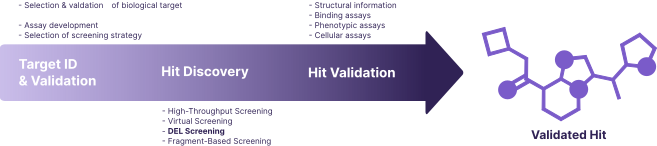
    Hit identification (HitID) comprises the screening strategy, assay design, data analysis, and triage used to move from millions/billions of candidates to a few dozen validated hits. Approaches include High-Throughput Screening (HTS), Virtual Screening (VS), DNA-Encoded Library (DEL) Screening, Fragment-Based Screening (FBS), and phenotypic screening, often combined in an integrated workflow tailored to the target class and data available (Ashraf 2024).

    How is a hit identified?

    The central point in hit identification is the capability of screening large compound libraries against biological targets. Early identification of promising compounds helps prioritize research efforts which can streamline the development process. A successful hit identification campaign will lead to several structurally diverse compounds amenable for a hit-to-lead campaign, which will save time and resources further in the drug development phase. This will in turn also lead to better preclinical candidates. One would typically aim for multiple, diverse chemotypes to seed parallel hit-to-lead tracks.

    Methods of Hit Identification

    Early-stage drug discovery can either start with a known ligand originating from academic literature, natural products or previous campaigns. Alternatively, de novo hit identification can be applied to identify novel chemical modulators. A range of different methods are employed for hit ID, which all focus on the screening of compound collections. Each method comes with strengths and weaknesses and below are the most promising methods summarized.

    Practical rules for designing compounds most often follow Lipinski’s Rule of Five to keep in the oral drug-like space which is widely used physicochemical guidelines for both library design and during hit-to-lead to balance potency with permeability and exposure (Lipinski 1997). Alternatively, fragment bases drug discovery usually follows the Rule of Three to give low molecular weight and low lipophilicity with minimal H-bond features. This is done to maximize solubility and biophysical detectability in FBS.

    Parameter Rule of 5 Veber rules Ghose Filter Rule of 3
    Molecular Weight < 500 Da 160 – 460 < 300 Da
    cLogP < 5 -0.4 – 5.6 ≤ 3
    Hydrogen Bond Donors < 5 ≤ 3
    Hydrogen Bond Acceptors < 10 ≤ 3
    # of rotatable bonds ≤ 10 ≤ 3
    PSA ≤ 140 Å
    # of atoms 20 – 70

    Table 1: Commonly used design rules for oral bioavailability. The rule of 3 is used for fragment libraries.

    High-Throughput Screening

    Principle: assay large plated libraries (96/384/1536-well) with automated liquid handling and high-density readouts (luminescence, fluorescence, FRET/TR-FRET, absorbance, HTRF, Alpha).

    Figure 2: High Throughput Screening workflow, which in short requires the assaying of hundreds of thousands of compounds in individual wells. Hits needs to be validated to sort out false positives.

    High-Throughput screening (HTS) is a cornerstone in hit identification in drug discovery and has since the 1990s been the primary method for identifying potential hits. HTS involves testing large libraries of compounds against a biological target to identify those who exhibit activity. The process of HTS typically allows for a compound library (stored in multi-well plates) against a recombinantly expressed target protein or enzyme. Compounds showing the highest read-out such as fluorescence or luminescence can then quickly be identified, isolated and validated. 

    However, HTS is often associated with high cost, as libraries needs to be acquired or synthesized and typically a robotic setup is utilized to handle the compound collection. Further, the compound collection has most often been synthesized in parallel which potentially hampers the diversity. False positives are also often identified from HTS which may arise from nonselective chemical reactions. Finally, either a biochemical or cellular assay, which generates a readout need to be developed. Where this is typically easy for common drug targets such as kinases and other enzymes, it can be more challenging for non-standard targets such as protein-protein interactions. 

    Typical library size: hundreds of thousands to a few million individually plated compounds for primary HTS, depending on the collection and assay format.

    Typical instrumentation: automated liquid handlers/dispensers; microplate readers; acoustic dispensers; plate washers; robotics and LIMS for data integrity.

    Advantages:

    • Direct measurement in a biochemical or cellular assay
    • Mature automation; throughput to 104-106 test/day
    • Broad assay menu; easy multiplexing

    Limitations:

    • Assay development burden (especially PPIs/membrane targets)
    • Cost of library curation
    • False positives (aggregation, autofluorescence, redox etc.)
    • Library bias can limit chemical diversity

    Virtual Screening

    Principle: in silico triage of large chemical spaces using structure-based docking, ligand-based pharmacophores, QSAR/ML, or hybrids.
    Representative tools: Glide, AutoDock Vina, GOLD, OpenEye FRED, MOE; ML-accelerated docking and AI pharmacophore modeling are increasingly used to shorten compute cycles.

    Figure 3: Basic principle of Virtual Screening followed up by compound resynthesis and hit validation. 

    With the exponentially growing capabilities of computational tools, in silico methods such as virtual screening has emerged as a powerful tool for hit ID. Virtual screening can be utilized to predict a small molecule interaction with a target protein before screening of physical compounds occurs. 

    While it might seem appealing to screen a virtual library to reduce the number of compounds needed for physical screening, several challenges must be overcome to achieve high quality hit compounds. First of all, high-quality structural data is necessary for the target protein as this will be essential for the subsequent docking studies. For example, a low-resolution crystal structure could potentially yield false positives and a lot of wasted resources. 

    Typical library size searched: millions→billions in silico (vendor + enumerated spaces), prior to wet-lab confirmation.

    Typical instruments: docking (Glide, AutoDock Vina), pharmacophore/QSAR, ML accelerators for docking scoring.

    Advantages:

    • Cost-effective way to rank/cluster before wet screening
    • Enables design-make-test-learn loops and scaffold hopping

    Limitations:

    • Dependent on target structure quality, protonation/tautomer states, and scoring functions
    • Requires rigorous prospective validation and decoy testing

    Screening of DNA-Encoded Libraries

    Principle: affinity selection of DNA-barcoded small molecules against a target; binders are identified by PCR/NGS counting and then resynthesized off-DNA for confirmation. Selections are quantified by NGS counts and gated against a mathematical background model; hits proceed to off-DNA resynthesis and IC₅₀/KD confirmation, followed by cellular EC₅₀/IC₅₀ and selectivity paneling (e.g., kinome maps) to prioritize series for SAR.

    Figure 4: Basic overview of DNA Encoded Library Screening

    DNA-Encoded Libraries (DELs) have emerged as powerful ways to generate compound collections ranging from a few millions to billions of compounds. Typically, a purified protein target is immobilized onto a solid support, which is then incubated with the DEL. Washing steps allow for the removal of non-binding library members and subsequent elution will isolate binding compounds which can be identified by PCR amplification followed by next generation sequencing (NGS). 

    One challenge with DELs arises from the split-and-pool synthesis where the small molecule is synthesized at one end of the DNA strand and the encoding DNA is ligated at the other end. This allows for truncations to appear leading to a high rate of false positives of resynthesized hits. Vipergen utilizes the YoctoReactor® to synthesize libraries, which ensures that non-reacted building blocks fall out of the library during purification allowing for high fidelity of the library and a low false positives rate during screenings.1

    Vipergen has developed binder trap enrichment (BTE) technology allowing us to screen without the need for immobilization of the target enzyme.2 Furthermore, Vipergen can now perform the screening in live cells using cellular binder trap enrichment (cBTE) overcoming the issue of expressing recombinant protein.3 This also allows for screening against proteins situated in membranes, which traditionally can be difficult to express recombinantly. 

    Typical library size: millions to billions of DNA-encoded compounds can be screened in a single tube, leveraging NGS readout.

    Typical instruments: Selection, NGS and off-DNA resynthesis. For Vipergen selections are run either using our BTE or cBTE platform. 

    Advantages:

    • Screens hundreds of millions of compounds rapidly
    • Powerful for challenging targets and selectivity profiling

    Vipergen advantages:

    • YoctoReactor® synthesis delivers 100% code-to-compound fidelity by purifying after each step, minimizing truncates and improving hit validation rates.
    • BTE® avoids target immobilization and counts ligand–target binding events in emulsion droplets—enabling residence-time-aware discovery and instant selectivity (multiplexed anti-targets).
    • DELs-in-Cells (cBTE®) is the first and only method for screening DELs inside living cells, expanding target space and physiological relevance.

    Figure 5: Schematic showing Vipergen’s cellular Binder Trap Enrichment in detail. Adapted from Petersen 2021.

    Limitations: 

    • Requires careful hit resynthesis and rigorous orthogonal validation
    • Selection statistics and library design influence false negatives/positives
    • Off-DNA translation essential before SAR

    Phenotypic Screening

    Principle: unbiased cell-based or organismal assays that measure phenotype (e.g., viability, morphology, reporter pathways) without prior target assignment. Can be part of a high throughput screening campaign.

    Typical instruments: high-content imaging, transcriptomic profiling, CRISPR/ORF tools, proteomics.

    Advantages:

    • Finds first-in-class mechanisms and polypharmacology
    • Captures cellular context (permeability, metabolism)

    Limitations:

    • Target deconvolution required (chemoproteomics, CRISPR perturb-seq, thermal proteome profiling)
    • Assay noise/biology can complicate triage

    Fragment-Based Screening

    Principle: screen low-MW fragments (≈150–250 Da) at higher concentrations to sample chemical space efficiently; merge/grow/link fragments into leads guided by structure.
    Primary readouts / instrumentation: SPR (real-time binding), NMR (STD/WaterLOGSY), X-ray crystallography (soak/co-crystal), ITC (thermodynamics), DSF/nanoDSF (stability shifts), MST.

    Figure 6: Basic workflow of Fragment Based Screening.

    Fragment based screening (FBS) has emerged as an alternative tool to traditional HTS. By screening and identifying small chemical fragments, subsequent work can focus on linking several fragments together to more complex structures with high affinity. This technique called fragment merging can hereby take simple substructures and merge these to form high affinity compounds. Where the initial screening is usually easy, the subsequent merging can be a time-consuming challenge, which often relies on structural data of the target. 

    Typical library size: 1–5K fragments (low-MW, high-solubility) screened with sensitive biophysical readouts.

    Typical Instruments: SPR, ITC, DSF, NMR, MST, X-ray. 

    Advantages:

    • High hit rates; efficient exploration of binding pockets
    • Structural methods provide clear design hypotheses

    Limitations:

    • Fragments are weak binders; requires sensitive biophysics and structure access
    • Chemical merging/growing can be resource-intensive

    Common challenges in hit identification:

    • False positives/negatives: assay interference (autofluorescence, redox cyclers, aggregation), library artifacts, and truncates in poorly controlled DELs.
    • Assay design risk: target construct/format, detection chemistry, and counter-screen choices profoundly influence outcomes.
    • Compound/library quality: identity, purity, and diversity balance are critical to avoid fishing in a narrow chemical pond.
    • Data analysis complexity: statistics, curve-fitting, and multi-condition selection analysis (e.g., selectivity panels) require robust pipelines.
    • Translatability: bridging from biochemical hits to cellular engagement (permeability, efflux, metabolism).

    How Vipergen helps: YoctoReactor® fidelity, BTE® residence-time awareness and multiplexed selectivity, and cBTE® in-cell screening directly address these pain points.

    Even with robust libraries and high-quality assays, signal triage is critical: in our p38α campaign, >90% (22/24) of resynthesized DEL hits confirmed biochemically, yet potency rank did not strictly track read count—affinity, off-rate, and library member frequency each influence enrichment. This illustrates why orthogonal validation + early ADME are essential to convert “signal” into decision-ready chemical matter (Petersen 2016).

    Hit validation

    Hits identified from one of the above screening campaigns first needs to be validated. Compounds with apparent activity need to be isolated in high purity and tested in the primary assay. Here false positives arising from impurities (often seen in HTS), fluorescence or aggregation can be removed. Following this filtering of false positives, a range of secondary assays needs to be employed to show the desired biological activity. A typical set of assays which could be employed is the following:

    • Flagging of Pan Assay Interference Compounds (PAINS), compounds with low solubility and compounds which have been observed as hits in prior screens.
    • Counter screens against targets where the compounds should not be active and cytotoxicity assays.
    • Orthogonal assays which serve to confirm target engagement. 

    The range of assays which can be employed to validate a hit range from biophysical methods such as NMR and thermal shift assays to showing target engagement in cells. Ultimately, more disease relevant assays should be investigated to show a mode of action of the identified hit. Besides hits identified from the primary screening hits can be optimized through structure activity relationship (SAR) studies. 

    Early ADME/Tox screens de-risk hits before scale-up: solubility and chemical stability in assay buffers; permeability/efflux flags for cellular assays; microsomal stability for clearance risk; and basic cytotoxicity or mechanism-agnostic counterscreens to catch liabilities. Combining orthogonal biophysics (SPR/ITC/DSF) with early ADME to separate true binders from assay artefacts and prioritize tractable chemotypes for SAR. Findings from our yR-DEL + BTE campaigns routinely move from biochemical potency to nanomolar cellular IC₅₀ with strong selectivity, minimizing false positives and accelerating H2L (Petersen 2016).

    Biophysical methods

    • SPR (surface plasmon resonance): Label-free, real-time kinetics (kon/koff), affinity, and stoichiometry
    • ITC (isothermal titration calorimetry): Direct thermodynamics (ΔH, ΔS, Kd)
    • DSF/nanoDSF (Differential Scanning Fluorimetry): Monitors protein stability shifts upon ligand binding for rapid triage
    • NMR: Epitope mapping and weak-binder detection
    • MSD (Meso Scale Discovery): Mobility changes reporting on binding

    Assay & binding metrics at a glance

    • IC50/EC50: Concentration producing 50% inhibition/effect in the assay; used to rank hits and monitor SAR
    • Ki: Enzyme inhibition constant; model dependent but closer to mechanism than IC50
    • KD: Equilibrium binding affinity from biophysics (e.g. SPR, ITC, or nanoDSF); useful across assay formats
    • Z-factor: Assay quality statistics capturing separation and variability of positive/negative controls; used to qualify HTS readiness

    Example from our DEL workflow: Resynthesis off-DNA hits proceeded from biochemical IC50 to cellular IC50 confirmation, including a 7 nM cellular IC50 p38α inhibitor discovery directly from a 12.6-million member yR library via BTE (Petersen 2016).

    Hit-To-Lead Process

    The goal of hit-to-lead (H2L) optimization is to convert validated hits into chemically coherent lead series with improved potency, selectivity, and developability. After initial confirmation and profiling, each hit undergoes systematic structure–activity relationship (SAR) exploration, physicochemical refinement, and biological evaluation to progress toward lead status.

    What distinguishes a lead compound?

    A lead is a hit that meets clearly defined thresholds in several key areas:

    • Potency: Demonstrates strong and reproducible activity, typically in the sub-micromolar range, with well-behaved concentration–response curves.
    • Selectivity: Shows a clean profile in target family panels and key off-target assays, minimizing potential liabilities.
    • ADME/DMPK properties: Exhibits suitable solubility, permeability, and metabolic stability, often supported by early in vitro or in vivo pharmacokinetic studies.
    • Safety and chemical stability: Lacks reactive or toxicophoric groups and displays acceptable cytotoxicity and chemical stability.
    • Synthetic tractability and IP position: Can be readily synthesized, modified, and protected, ensuring scalability and freedom-to-operate.

    From hit to lead – an iterative optimization workflow:

    1. Hit reconfirmation and triage – resynthesis and purity verification, followed by confirmatory assays and orthogonal biophysical validation (e.g., SPR, ITC, DSF).
    2. Initial SAR exploration – analogue synthesis guided by structural or ligand-based insights to map potency and selectivity trends.
    3. Property optimization – adjust physicochemical and ADME parameters (solubility, lipophilicity, stability) to balance efficacy with developability.
    4. Selectivity and safety profiling – expand counter-screening and secondary assays to identify clean, specific chemotypes.
    5. Lead series selection – prioritize 1–3 promising series for detailed optimization and potential structural biology studies.

    Vipergen’s integrated approach:

    Vipergen’s DNA-encoded library (DEL) platformsYoctoReactor®, BTE®, and cBTE®—streamline the hit-to-lead transition by delivering high-quality, well-validated hits with immediate structural diversity. These platforms reduce false positives, enable residence-time-aware and cellularly relevant hit validation, and shorten the path to robust, patentable lead candidates (Petersen 2021).

    Through close collaboration, Vipergen supports partners from initial hit validation through SAR expansion and lead optimization, ensuring that each project advances with efficiency, selectivity, and scientific confidence.

    Future trends in hit identification

    • AI/ML-accelerated screening: ML models that pre-score docking or learn from prior campaigns to triage libraries faster; AI pharmacophore modeling complements structure-based methods (Singh 2024, Hayek-Orduz 2025).
    • In-cell selection & target engagement: technologies like cBTE® extend discovery inside living cells, improving physiological relevance (Petersen 2021).
    • Next-gen assays: high-content phenotypic imaging, microfluidics, and multiplexed biochemical/cell panels to increase information per screen.
    • Integrated workflows: combining VS → DEL/HTS → biophysics/phenotypic back-validation to exploit orthogonal strengths (Ashraf 2024).

    Why Vipergen for Hit ID?

    • YoctoReactor® DELs: 100% code–compound match by design → cleaner data, fewer truncates, higher hit validation rates.
    • BTE® (in vitro): no immobilization, residence-time-aware selections, instant selectivity vs. anti-targets with μg protein consumption.
    • cBTE® (in living cells): first and only DEL screening inside living cells—broadens target scope and improves translational relevance.
    • Selectivity Direct & partner network: multiplexed target/anti-target screening and structure support to accelerate SAR.
    • Engagement models from fee-for-service to integrated collaborations; Express and Snap options for turnaround and budget flexibility.

    Explore our In vitro and In living cell Hit Identification Services or get in touch via Inquiry.

    References

    • Ashraf, S. N. et. al., Hit me with your best shot: Integrated hit discovery for the next generation of drug targets, Drug Discov Today, 29 (10), 104143 (2024). https://doi.org/10.1016/j.drudis.2024.104143 
    • Ghose, A. K. et. al. A Knowledge-Based Approach in Designing Combinatorial or Medicinal Chemistry Libraries for Drug Discovery. 1. A Qualitative and Quantitative Characterization of Known Drug Databases, J Comb Chem, 1 (1), 55-68 (1999). https://doi.org/10.1021/cc9800071 
    • Hayek-Orduz, Y. et. al. dyphAI dynamic pharmacophore modeling with AI: a tool for efficient screening of new acetylcholinesterase inhibitors, Front Chem, 13, 1479763 (2025). https://doi.org/10.3389/fchem.2025.1479763 
    • Hughes, J. P. et. al., Principles of early drug discovery, Br J Pharmacol, 162 (6), 1239-1249 (2011). https://doi.org/10.1111/j.1476-5381.2010.01127.x
    • Lipinski, C. A. et. al. Experimental and computational approaches to estimate solubility and permeability in drug discovery and development settings, Adv Drug Deliv Rev, 23 (1-3), 3-25 (1997). https://doi.org/10.1016/S0169-409X(96)00423-1 
    • Petersen, L. K. et. al. Novel p38α MAP kinase inhibitors identified from yoctoReactor DNA-encoded small molecule library, MedChemComm, 7, 1332-1339 (2016). https://doi.org/10.1039/C6MD00241B  
    • Petersen, L. K. et. al. Screening of DNA-Encoded Small Molecule Libraries inside a Living Cell, J Am Chem Soc, 143 (7), 2751-2756 (2021). https://doi.org/10.1021/jacs.0c09213 
    • Singh, S. et. al., Advances in Artificial Intelligence (AI)-assisted approaches in drug screening, Artif Intell Chem, 2 (1), 100039 (2024). https://doi.org/10.1016/j.aichem.2023.100039
    • Veber, D. F. et. al., Molecular Properties That Influence the Oral Bioavailability of Drug Candidates, J Med Chem, 45 (12), 2615-2623 (2002). https://doi.org/10.1021/jm020017n

    Do you have an inquiry?

    Contact us today and explore partnership opportunities.

    Get In Touch

    Related Services

    Continue reading